
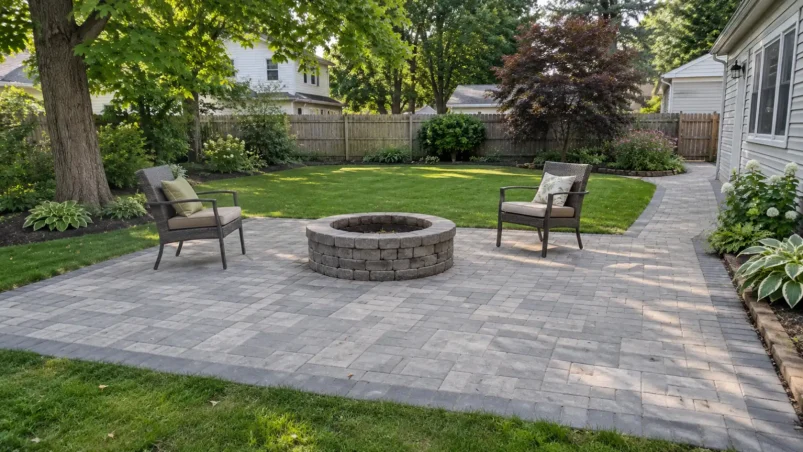
The shape of your patio is a good starting point for choosing fire pit seating. On a small rectangle, two angled chairs can leave a clear walk from the back door to the lawn. On a round patio, a curved seat wall can follow the edge of the paving, with its opening facing the house. Once you know where people will sit and how they’ll get there, matching the finishes and choosing lights gets easier. You can pick up a color from the pavers and light the particular step or wall end a guest needs to see.
Three fire pit and seating ideas to fit your patio
Choose the example that most closely resembles how you use your yard. Each assumes you’ve picked a suitable location and can meet the fire pit manufacturer’s clearance requirements and applicable local rules. If you’re still comparing shapes and fuel types, start with these backyard fire pit design ideas.
A compact patio that also serves as a walkway
Stand at the back door and look toward the gate or lawn. Keep the side you naturally walk along open. On the other side, angle two movable chairs so you can see both the fire and the person beside you. A small table between the chairs gives you somewhere to put a drink without using the walking space.
Here, the paver border can define the seating area as neatly as a low wall would. If the border is charcoal, try a masonry surround with gray in its face. Place a shielded path light beside the point where the walk meets the patio. You’ll see the edge on your way out, and either chair can still move when you need the space for dinner. If you’re planning a fire pit on a budget, start with the chairs you already own and add the seat wall later.
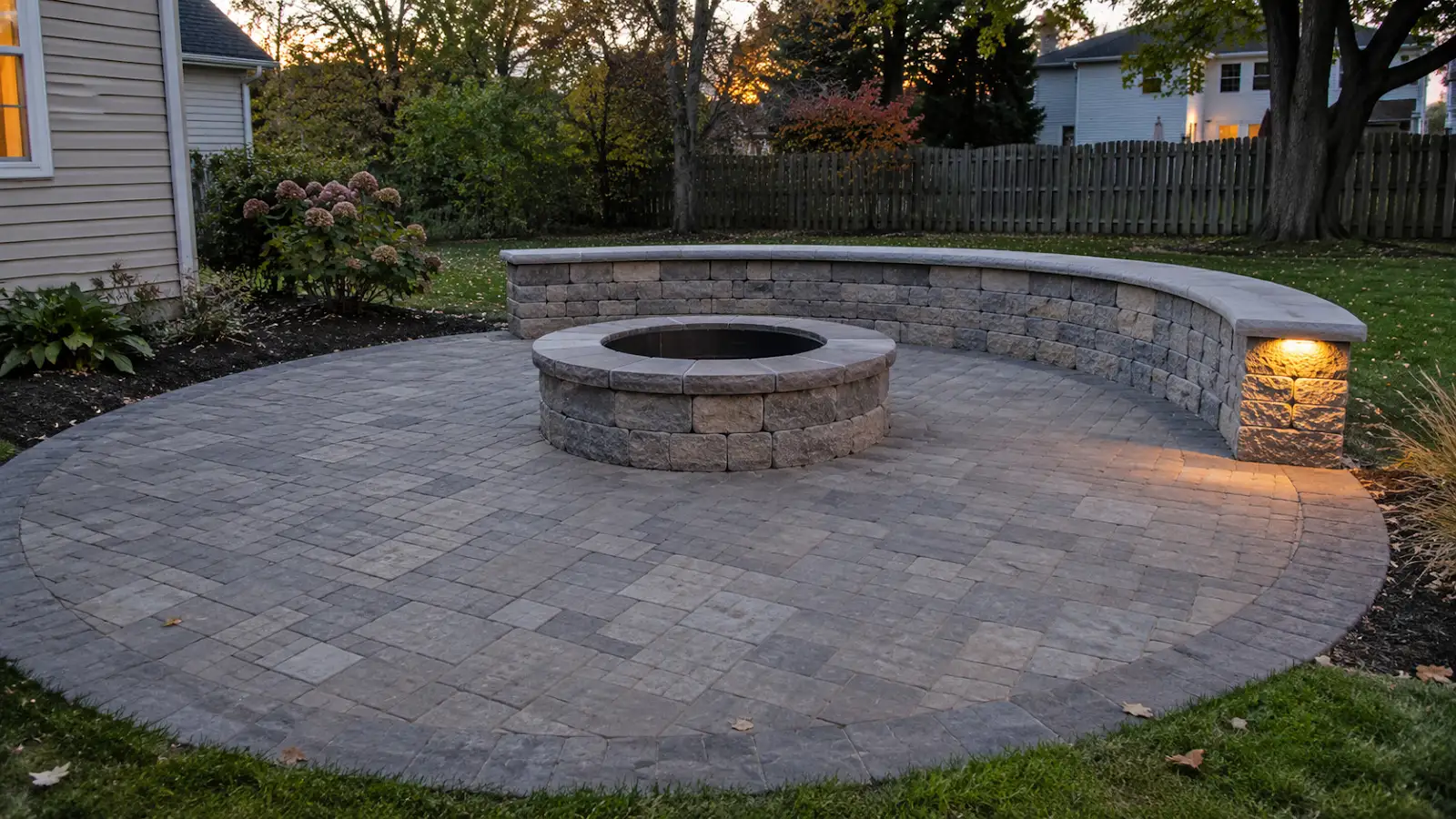
A round patio where friends gather around the fire
Use a partial curved seat wall on the side farthest from the house. Face the opening toward the back door so arriving guests can walk straight to a seat. Add loose chairs at the open side if you often host a larger group. Leave room to turn a chair or move it away from drifting smoke.
A smooth cap gives the textured masonry a comfortable sitting surface. Try a cap that echoes a shade in the pit surround, then look at both from across the patio. If you want light under the cap, discuss a compatible fixture before choosing the wall system. A light near the point where the curve ends can show an arriving guest where to turn. From the chair opposite, the cap should conceal the bright source.
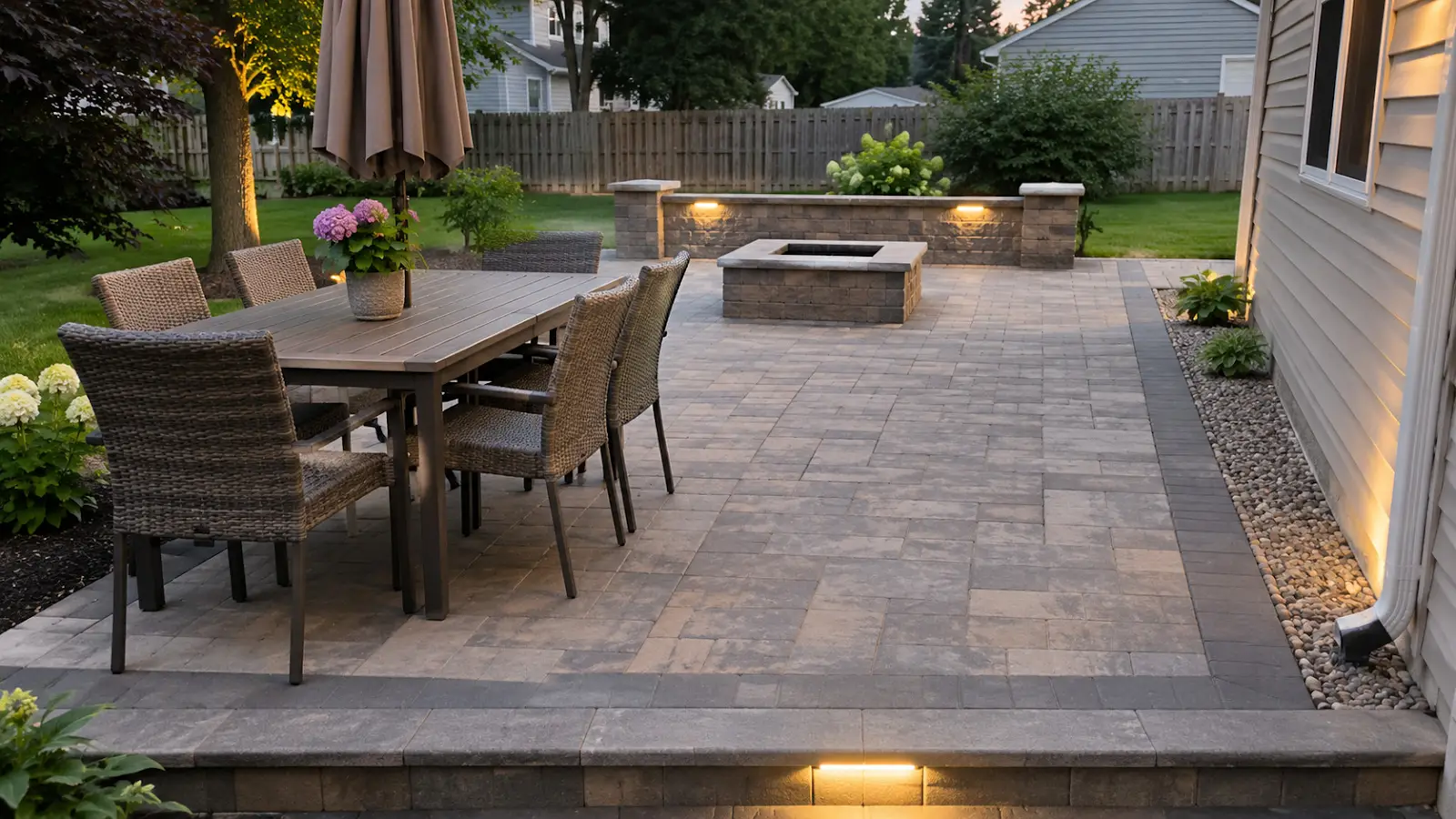
A long patio with a dining table at one end
Start with the dining chair closest to the proposed fire area. Pull it out as though someone has just stood up. The space left behind it tells you where the fire pit seating can begin. Try a short straight wall along the outside edge and loose chairs facing it. Keep the route from the kitchen to the yard along the side so someone carrying plates can pass the group.
Repeat a strip of accent paving from the dining area along the seat wall to connect the two ends. If the patio changes level, light the step itself. On a level patio, concentrate light where the route turns toward the seats. If the end dining chair still pinches the walkway, shorten the proposed wall and test the layout again.
Which finishes should match?
Choose the material that is staying, usually the patio paver. Look for a color you can repeat in one other surface. On mixed gray pavers with a dark border, a charcoal wall cap picks up the border while a lighter fire pit remains easy to distinguish. On a patio of weathered red brick, a warm gray wall face can sit quietly behind the brick pattern. A smooth cap above it gives the bench a distinct edge.
Compare pavers and wall materials in the positions they will occupy. Lay the paving and cap samples flat and hold the wall sample upright. Step back to the patio door. A wall face in shade can look quite different from the same color on a sunlit cap.
Choose fire pit components specified for the model, even if a landscape wall block looks identical. If the patio is already built, check the surface and base as well as the finish. This guide to adding a fire pit to an existing paver patio explains what to check before choosing a kit.
Where should the lights go after dark?
Walk from the back door to the seats at dusk with the fire unlit. Notice where you glance down. That might be the edge of the paving, a single step or the end of the bench. Put the first pool of light there. On a small patio that may be the only spot that needs more light. On a longer one, walk back toward the house as well. A step that’s obvious going up can be hard to pick out going down.
Now sit in the lowest chair and ask someone to hold a portable light near the proposed fixture position. Can you see the wall end and the face of the person opposite? If the lamp itself catches your eye, try a lower or more shielded position. Make that adjustment before deciding where a permanent fixture belongs.
A five-minute test before you commit to a seat wall
With the pit unlit, mark both wall ends on the paving and set out your actual chairs and side table. Ask someone to sit back with their feet out while you carry a tray from the door. Put it down, take a seat, then get up and walk past the group. If someone has to tuck in their feet, try rotating the seating group or moving the wall opening toward the approach. Repeat the walk with the dining chairs pulled out if the patio serves both spaces.
For help comparing finishes, bring a daylight patio photo, rough dimensions and a spare paver to Miller Brick’s Rochester showroom. Seeing fire pit kits and surrounds beside your own paving sample makes it easier to decide which color to carry through to the seat wall.
Frequently Asked Questions About Fire Pit Seating
What if my existing paver color has been discontinued?
Start with a complementary shade from the weathered paving. Set the new sample beside several existing pavers in daylight. If a near match makes the color difference more obvious, try a darker cap or surround that also picks up the patio border.
Can I add a seat wall after the patio is finished?
You can plan the wall now and use movable chairs in the meantime. Before new paving goes down, ask your installer to review the wall’s future location, support needs and any lighting you want beneath the cap. Those decisions affect whether finished pavers would need to come back up later.
How can a wheelchair user join the seating group?
Reserve an open place alongside the other seats, with a clear route into and out of it when the chairs are occupied. If you’re designing for someone you know, invite them to try the approach and turn into position before you settle on the wall length. Check that a side table or pulled-back chair won’t block their way out.