
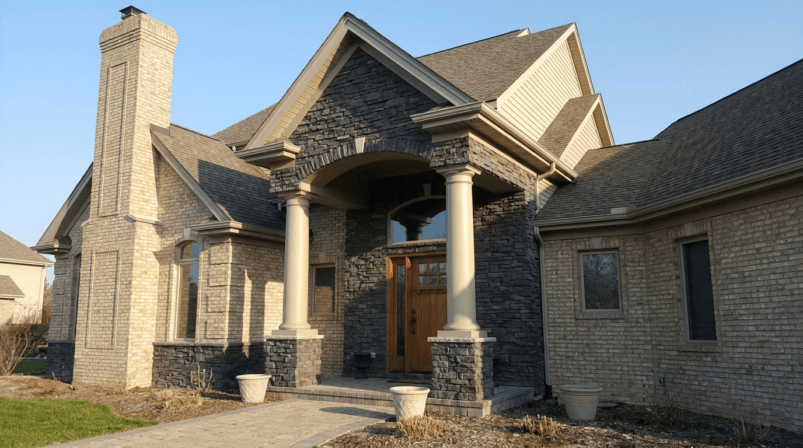
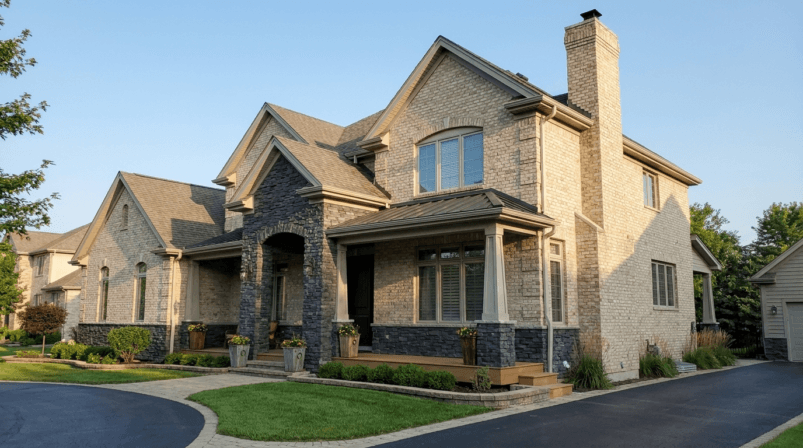
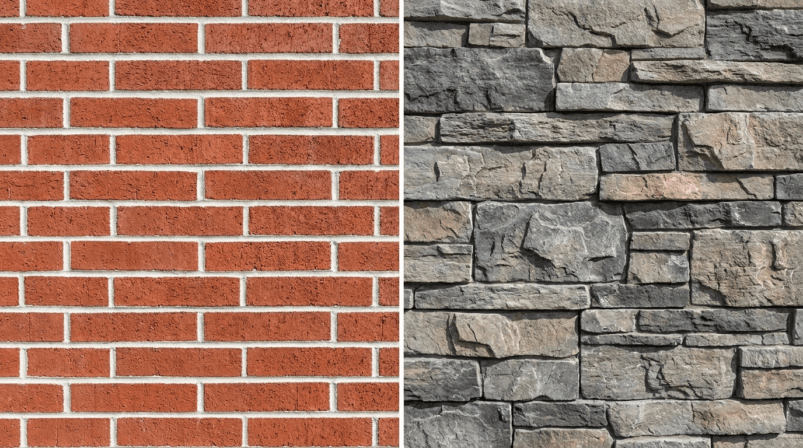
Brick veneer is usually the stronger choice for a classic, consistent exterior with clean lines and long-term curb appeal. Stone veneer is usually the better fit when you want more texture, depth, and visual weight around entryways, columns, fireplaces, or lower façade areas.
For most homes, the choice comes down to how the material will be used. A full exterior wall needs different thinking than a front entry accent. A traditional brick façade creates a different look than a textured stone base or fireplace surround. This guide compares brick veneer vs stone veneer siding by cost, appearance, durability, maintenance, installation, and best use so you can narrow the right option before choosing materials.
Start With the Project, Not Just the Material
Brick veneer and stone veneer both work well on home exteriors, but they solve different design problems.
- Choose brick veneer when you want a structured, traditional look across larger wall areas. It works especially well on façades, chimneys, and homes where color consistency and clean patterning matter.
- Choose stone veneer when the project needs texture, contrast, or a stronger focal point. It is often used around front entrances, porch columns, outdoor fireplaces, foundation accents, and feature walls.
- Use both materials when the home needs balance. Brick can carry the main exterior, while stone adds depth in selected areas.
- Confirm installation requirements early if the project involves exterior walls, moisture exposure, freeze-thaw conditions, or mixed materials. Veneer performance depends heavily on the product, substrate, flashing, drainage, and installer experience.
The best choice is not just the material that looks good in a photo. It is the one that fits the wall area, home style, budget, and installation conditions.
What Homeowners Should Know About Brick Veneer Siding
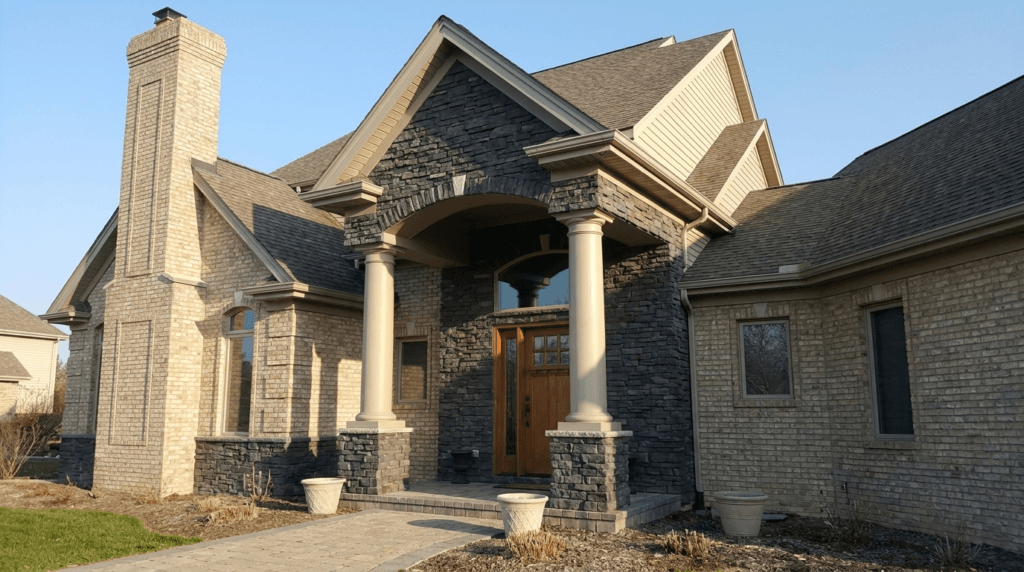
Brick veneer gives a home the appearance of brick without relying on a full structural brick wall. In most modern exterior applications, the veneer is a facing material installed as part of a wall system. The structure comes from the wall behind it, while the brick provides the visible masonry finish.
Brick veneer works well when the goal is consistency. It gives the exterior a steady rhythm, clear lines, and a grounded look. That makes it a strong fit for Colonial homes, ranch homes, traditional suburban exteriors, chimneys, front entries, and larger façade areas.
It also gives homeowners a wide range of design choices. Color, texture, size, finish, mortar color, and pattern can all change the final look. If you are comparing options for an exterior project, Miller Brick’s brick options show how much variety is available beyond standard red brick.
What Homeowners Should Know About Stone Veneer Siding
Stone veneer is often chosen when a project needs more depth, contrast, or natural variation. It can make an entrance feel more substantial, add weight to the lower part of a façade, or turn a fireplace into a stronger focal point.
Stone veneer products are usually grouped into three main categories:
- Natural stone veneer is real stone cut thinner for veneer applications.
- Manufactured stone veneer is made to resemble natural stone and is available in many colors, shapes, and profiles.
- Faux stone panels are lightweight decorative panels and should be evaluated separately from masonry veneer products.
Stone veneer is highly visual, so scale matters. A profile that looks attractive on a small sample may feel too busy across a large wall. A color that looks warm indoors may read differently next to siding, roofing, trim, and landscaping. That is why comparing stone veneer colors, textures, and profiles in person can make the decision much easier.
Brick Veneer vs Stone Veneer Siding: Side-by-Side Comparison
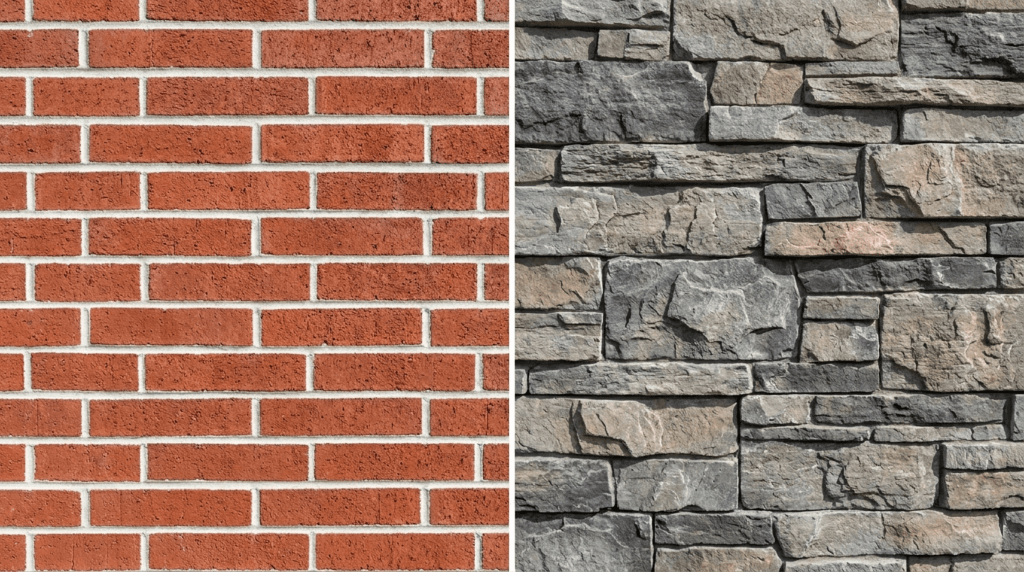
| Factor | Brick Veneer | Stone Veneer | Better Fit |
|---|---|---|---|
| Overall look | Classic, uniform, structured | Textured, varied, dimensional | Depends on home style |
| Best visual role | Main exterior field | Accent or feature material | Brick for full areas, stone for impact |
| Budget planning | Often more predictable | Wider range by type and profile | Brick veneer for tighter budgets |
| Design flexibility | Strong color and pattern consistency | Strong texture and profile variety | Stone veneer for visual depth |
| Maintenance | Low, but mortar and drainage still matter | Low, but texture and installation quality matter | Tie |
| Installation | Requires correct masonry detailing | Requires proper substrate and moisture detailing | Depends on wall system |
| Best uses | Façades, chimneys, traditional exteriors | Entryways, columns, fireplaces, lower façades | Depends on project area |
| Mixing potential | Works well as the base material | Works well as the accent material | Strong option when planned carefully |
Cost and Value: Which One Usually Costs Less?
Brick veneer is often easier to plan from a budget standpoint, especially across larger wall areas. Its shape, pattern, and installation layout tend to be more consistent, which can make estimating more straightforward.
Stone veneer can have a wider price range. Natural stone, manufactured stone, irregular profiles, specialty colors, corners, cuts, and labor complexity can all affect the final project cost. A small stone accent may be manageable, while a large stone façade can become a bigger investment.
Value should be judged by where the material creates the most impact. Brick veneer may be the better value for a full exterior because it can provide a complete, cohesive finish. Stone veneer may be the better value when used in smaller, high-visibility areas such as an entryway, fireplace, porch column, or foundation accent.
Appearance and Curb Appeal: Which Look Fits Your Home?
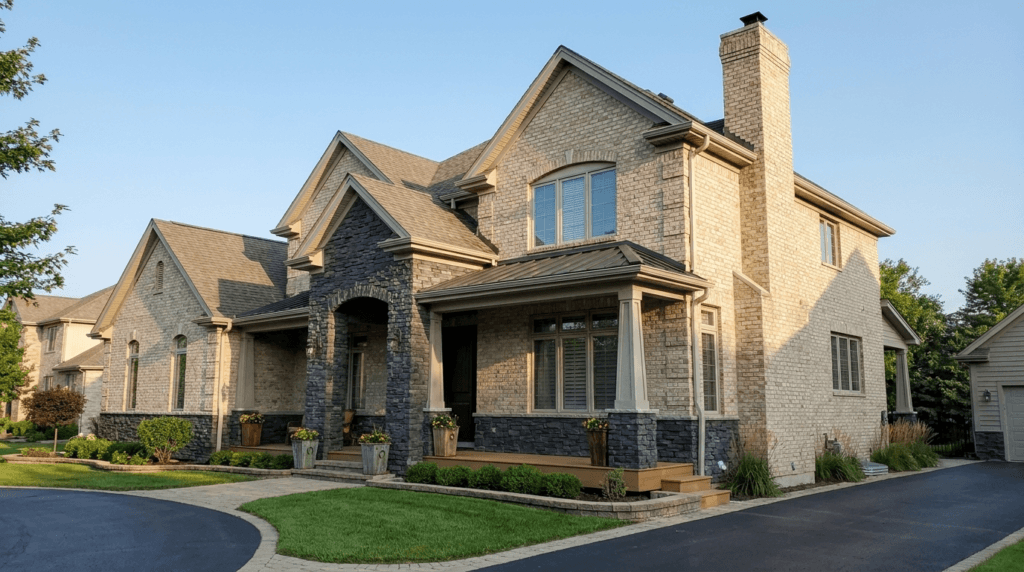
Brick veneer creates order. Stone veneer creates movement. That single distinction helps many homeowners narrow the choice.
Traditional homes often work well with brick veneer because the lines are clean and the pattern feels established. Brick can support a formal or classic exterior without overwhelming the rest of the home.
Craftsman, cottage, and rustic-inspired homes often benefit from stone veneer accents. Stone adds texture around porch columns, lower walls, and front entries, especially when paired with warm siding, wood details, or natural landscaping.
Modern homes can use either material, but restraint matters. A smooth or darker brick can support a cleaner modern exterior. Stone can also work when the profile is simple and the color palette stays controlled.
Mixed-material exteriors need careful editing. Brick, stone, siding, roofing, trim, and landscaping all compete visually. Too many colors or textures on one elevation can make the exterior feel busy instead of custom.
Durability and Maintenance: What Should Homeowners Expect?
Both brick veneer and stone veneer can perform well when the product is appropriate for the application and the installation is done correctly. The visible veneer is only one part of the system. Mortar, flashing, drainage, water-resistive barriers, substrate condition, and installer skill all influence long-term performance.
Brick veneer is often easier to visually inspect because the pattern is consistent. Cracked mortar, staining, or movement may be easier to spot. Stone veneer has more natural variation, which can help disguise minor color changes, but its texture may require closer inspection over time.
Homeowners should plan for basic upkeep:
- Check mortar joints for cracks or gaps.
- Keep weep areas and drainage paths clear.
- Look for loose pieces after harsh weather.
- Avoid harsh cleaning methods that can damage the surface or mortar.
- Address moisture issues early instead of waiting for visible damage.
Installation and Moisture Management: The Detail That Protects the Project
Exterior veneer is not just a decorative layer. It needs the right wall preparation and moisture-control details behind it.
Before choosing brick veneer or stone veneer siding, homeowners should ask how the system will handle water. Rain, melting snow, wind-driven moisture, and condensation all have to be considered. The goal is to prevent water from being trapped where it can damage the wall assembly.
Key installation details may include:
- Proper substrate preparation
- Flashing at transitions and openings
- A drainage plane behind the veneer
- Weep holes or weep systems where required
- Water-resistive barrier
- Correct mortar and joint details
- Manufacturer installation instructions
- Local code requirements
- Installer experience with the selected product
Best Uses for Brick Veneer and Stone Veneer
The strongest designs usually start with the role of the material. Is it carrying the exterior, or is it creating an accent?
Brick Veneer Works Well For
Brick veneer is a strong option for:
- Full or partial façades
- Traditional exterior siding areas
- Chimneys
- Front entries with a clean masonry look
- Homes needing consistent color and pattern
- Projects where long, uninterrupted wall areas need structure
Brick works especially well when the home needs a steady visual foundation. It can add character without adding too much texture.
Stone Veneer Works Well For
Stone veneer is a strong option for:
- Front entry accents
- Porch columns
- Foundation accents
- Fireplace surrounds
- Outdoor living features
- Lower façade sections
- High-impact curb appeal areas
Stone is often most effective when used with intention. A small amount around the right feature can give the exterior more depth without making the whole façade feel heavy. If you are planning an accent area, Miller Brick’s stone veneer options can help you compare profiles and colors before committing.
Can You Combine Brick Veneer and Stone Veneer?
Yes. Brick veneer and stone veneer can work well together when one material clearly leads and the other supports.
A common approach is to use brick as the main exterior field and stone as the accent. Brick provides structure and consistency. Stone adds texture around areas that deserve more attention, such as the front entrance, porch columns, chimney, or lower façade.
To keep the design balanced:
- Use one material as the dominant finish.
- Match warm tones with warm tones and cool tones with cool tones.
- Avoid placing too many heavy textures on the same elevation.
- Compare samples next to siding, trim, and roof colors.
- Keep the overall palette simple.
This is also where supplier selection matters. A curated mix of brick and stone options makes it easier to find materials that complement each other instead of competing. Miller Brick works with a range of trusted suppliers, which helps homeowners and contractors compare options across style, texture, and budget.
How to Decide Before You Buy
Before choosing a product, make the project criteria clear. This helps you avoid picking a material that looks good by itself but does not fit the home.
- Decide where the veneer will go. A full façade, chimney, entryway, column, fireplace, and foundation accent all have different design and installation needs.
- Choose the visual role. Brick usually works well as the main exterior material. Stone often works best as a feature or accent, though it can be used more broadly with the right design.
- Set the budget around the whole project. Include material, labor, corners, cuts, wall preparation, delivery, and installation requirements.
- Match the material to the home’s architecture. Look at roof color, siding, trim, windows, porch style, landscaping, and neighboring exterior materials.
- Compare samples in person. Photos help narrow the list, but samples show the actual color, texture, weight, and scale.
- Ask installation questions early. Before ordering, confirm substrate needs, flashing details, drainage, water-resistive barrier, mortar, and product-specific instructions.
Bringing the Choice Back to Your Home
Choose brick veneer if you want a classic, consistent exterior that works well across larger wall areas. Choose stone veneer if you want texture, depth, and stronger visual impact in key areas of the home.
For many projects, the best design uses both materials carefully. Brick can create the main structure of the exterior, while stone can highlight the entry, chimney, fireplace, columns, or foundation.
Miller Brick helps Rochester homeowners and contractors compare brick and stone veneer options in person. Bring your project photos, plans, or color samples to the showroom, and the team can help you narrow the material choices that fit your home, budget, and installation needs.
FAQs About Choosing Brick Veneer and Stone Veneer Siding
What should I check before choosing brick veneer or stone veneer?
Start with the project area. A full wall, chimney, entryway, porch column, and foundation accent all need different material choices. Then check the budget, home style, product weight, installation method, and moisture-control details.
Can brick veneer or stone veneer go over existing siding?
Usually, no. Existing siding is normally removed first so the wall can be prepared properly. Veneer needs the right backing, drainage, flashing, and water protection behind it.
Which is better for a full exterior wall?
Brick veneer is usually the better choice for larger exterior areas because it gives a clean, consistent pattern. Stone veneer can work on large areas too, but the texture needs to be chosen carefully so the house does not look too heavy.
Which is better for a front entry?
Stone veneer is often the better choice for a front entry because it adds texture and visual weight. Brick veneer works well if the home already has a traditional style or brick details elsewhere.
Can brick veneer and stone veneer be used together?
Yes. The best approach is to let one material lead. Brick can be the main exterior material, while stone can highlight the entry, columns, chimney, fireplace, or lower façade.
What makes veneer siding fail?
Most problems come from poor installation, trapped moisture, weak wall preparation, missing flashing, or using the wrong product outside. The material matters, but the installation matters just as much.
Is brick veneer or stone veneer better for cold climates?
Both can work well in cold climates if installed correctly. The main concern is moisture. In freeze-thaw weather, trapped water can cause problems, so drainage and flashing details matter.