
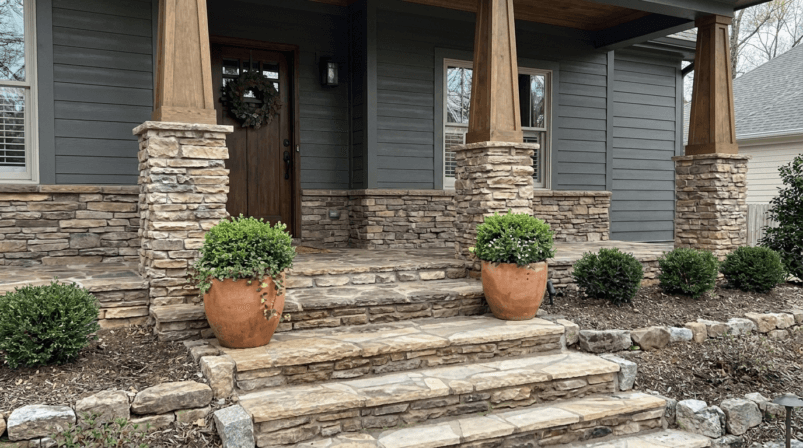
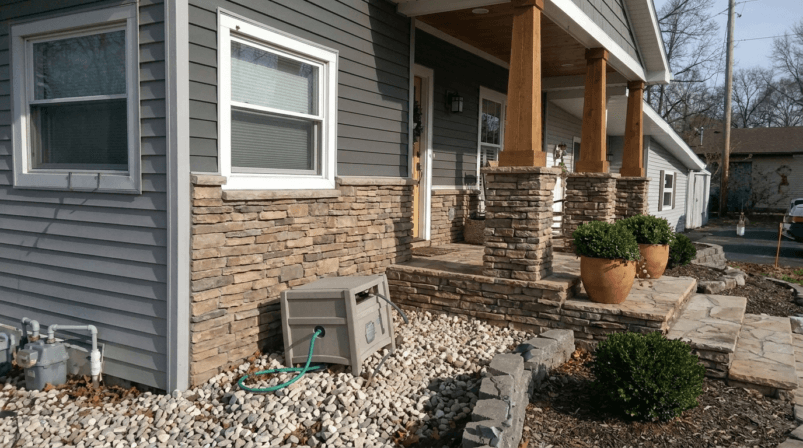
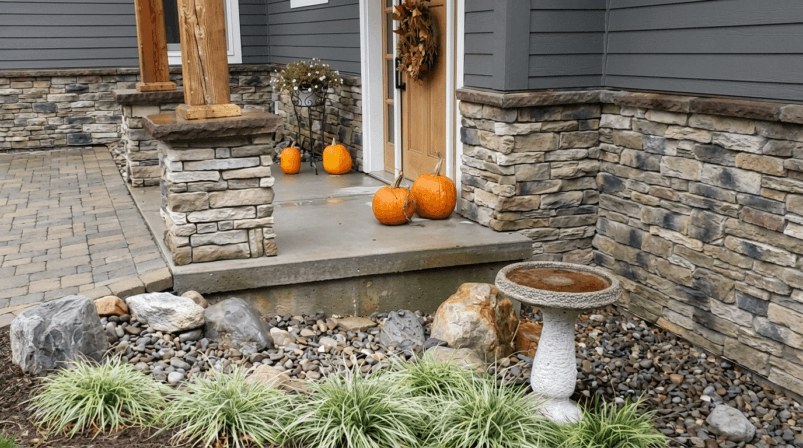
Stone siding works best when it is tied to the structure of the home: the entry, the base of the wall, the garage, the chimney, the porch, or an outdoor living area. When the placement is intentional, stone adds depth and texture without making the exterior feel overdone.
The real question is not just whether stone will look good. It is where the stone should go, how much should be used, and what it should be paired with. The right answer depends on the home’s architecture, siding color, roof tone, trim, budget, and existing exterior materials.
Below are practical ways to use stone siding in exterior design, along with the material and design details worth reviewing before choosing a final stone veneer.
Best Ways to Use Stone Siding Outside Your Home
Stone siding can work as a major exterior feature or as a focused accent. The strongest applications usually fall into these categories:
- Full front façade: Best when stone is meant to be the main exterior material.
- Lower-wall stone wainscoting: Adds weight and structure without covering the whole house.
- Front entry framing: Makes the door area feel more finished and intentional.
- Porch columns and pier bases: Gives porches a stronger, more grounded look.
- Garage accents: Breaks up large garage walls and connects the garage to the main façade.
- Chimneys and fireplace chases: Creates a natural masonry focal point.
- Gables and bump-outs: Adds texture to smaller architectural sections.
- Stone with siding or brick: Creates contrast between masonry and smoother exterior finishes.
- Outdoor living transitions: Connects the home to patios, fire pits, retaining walls, and walkways.
The best choice depends on scale. A larger home may need more stone to look balanced, while a smaller ranch or colonial may look better with a lower-wall or entry-focused application.
Choose the Right Stone Product Before Choosing the Layout
Product choice affects more than appearance. It changes the depth, weight, texture, profile, color range, installation requirements, and final cost of the project.
At Miller Brick, homeowners and contractors can compare stone veneer options such as full-bed masonry, natural thin stone, hand-crafted thin stone, and thin brick. A rustic, irregular stone creates a very different effect than a cleaner, more uniform profile, even when both are used in the same location.
| Material Type | Best For | Design Effect | Planning Note |
|---|---|---|---|
| Full-bed masonry stone | Substantial masonry projects | Deep, dimensional, traditional | Heavier and more involved than thin veneer |
| Natural thin stone | Authentic stone variation | Natural color, shape, and surface movement | Strong choice when real stone character matters |
| Manufactured or hand-crafted stone veneer | Flexible exterior accents | More controlled profiles and color ranges | Useful when matching a specific design style |
| Thin brick | Brick-style masonry accents | Classic, structured, familiar | Good for traditional homes or brick-adjacent designs |
For exterior applications, product suitability and installation details matter as much as style. Stone veneer should be selected for the exposure and installed with proper moisture management, flashing, transitions, and drainage where needed.
1. Use Stone Across the Full Front Façade
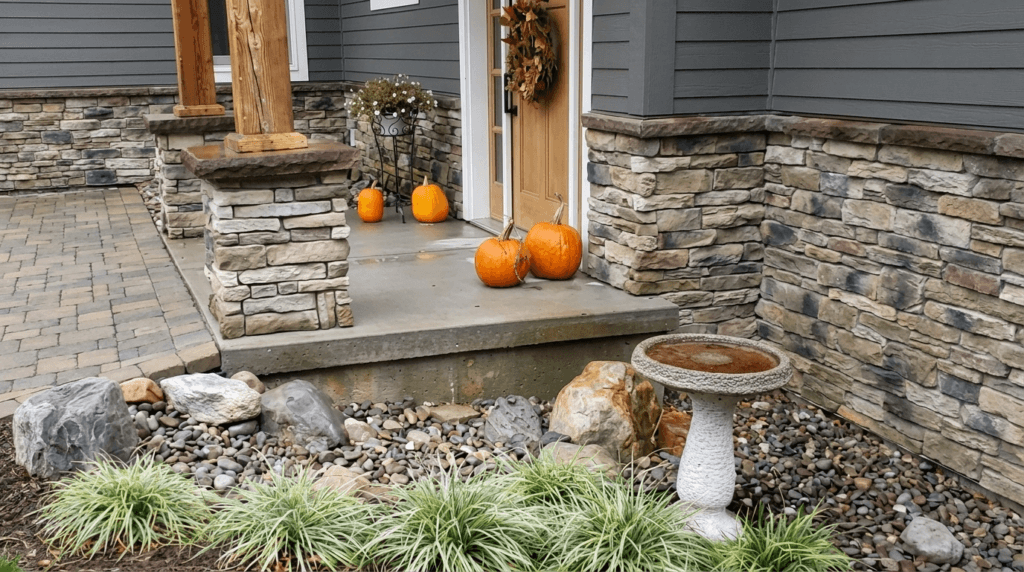
A full stone façade gives the home a strong, established look. It works best when the house has enough scale to carry the material and when the roof, trim, windows, and landscaping are kept visually controlled.
This approach fits homes where stone should be the dominant feature: lodge-style homes, cottage-inspired homes, some traditional designs, and certain modern exteriors with clean lines. It can also work well when the rest of the property already uses masonry or natural hardscape materials.
Use full-façade stone when:
- The home has enough size and structure: A larger front elevation can handle more texture.
- The design needs a clear focal material: Stone becomes the main exterior finish, not a small accent.
- The roof and trim are simple: Too many colors or competing details can make full stone feel busy.
Avoid choosing full stone only because it looks impressive in a photo. On the wrong house, it can feel heavy. On the right house, it can make the exterior look permanent, grounded, and well planned.
2. Add Stone to the Lower Half of Exterior Walls
Lower-wall stone is one of the most practical ways to use stone siding. It gives the home a strong base while leaving room for siding, brick, stucco, or board-and-batten above.
This works especially well on ranch homes, colonials, craftsman-style homes, and newer builds with broad front walls. A lower stone section can reduce the flatness of tall siding areas and make the home feel more connected to the landscape.
A few details make or break this look:
- The stone height should line up with windows, porch lines, or other natural breaks.
- The transition between stone and siding should look clean and deliberate.
- The cap detail should feel proportional, not too thin or oversized.
- The stone color should work with the siding, roof, and trim together.
This is also a good option when you want masonry character without committing to a full stone façade. Before choosing the final profile, compare stone veneer samples in natural light. Texture and undertone often look different outside than they do on a screen.
3. Frame the Front Entry with Stone
The front entry is one of the most effective places to use stone because it already acts as the main focal point. Stone around the door, porch, or front steps can make the entry feel more finished without changing the entire exterior.
This approach works especially well when the front of the house feels flat or the doorway needs more visual weight. Stone can be used on the wall around the entry, beside sidelights, on porch bases, or as part of a front-step and walkway design.
Entry stone works best when it connects to at least one other exterior detail, such as:
- Porch columns
- A lower stone wall
- Garage accents
- Walkway pavers
- Landscape walls
- Exterior lighting
For visual planning, Miller Brick’s project gallery can help homeowners see how masonry, stone façades, and hardscape materials work together in real exterior settings.
4. Wrap Porch Columns, Pillars, or Pier Bases
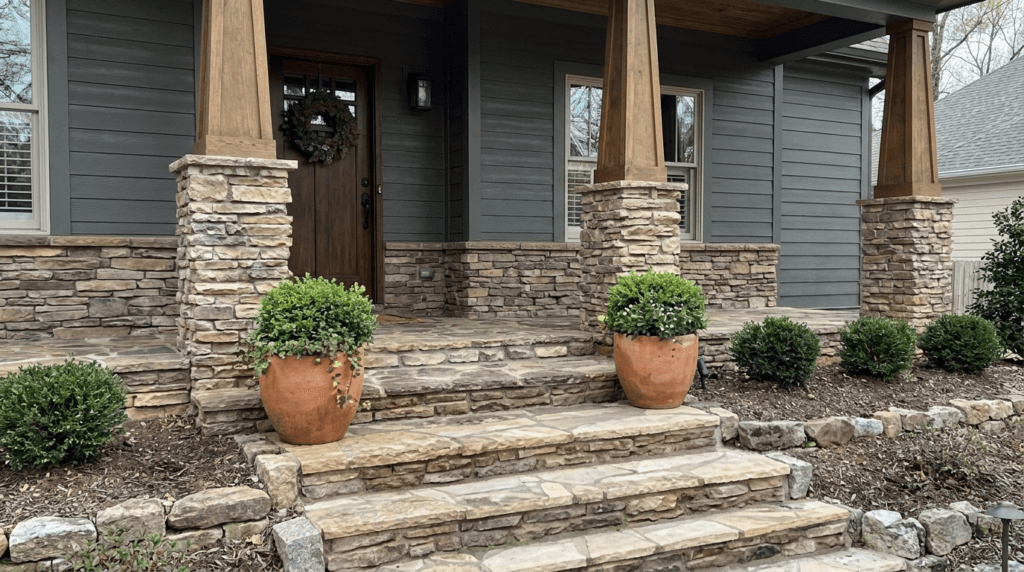
Stone-wrapped columns can make a porch feel stronger and more complete. Instead of thin posts sitting directly on the porch floor, stone bases give the structure weight and help connect it to the rest of the home.
This is a strong fit for craftsman, farmhouse, cottage, and traditional exteriors. It also works well when stone appears elsewhere on the home, such as the entry, garage, chimney, or lower wall.
Good applications include:
- Column bases: Stone on the lower portion of porch posts for a balanced look.
- Full column wraps: Stone from base to top when the porch needs a stronger feature.
- Pier bases: Stone on porch supports, entry piers, or low walls.
Scale matters here. A large porch roof needs columns and bases that feel strong enough to support it visually. If the stone base is too narrow or too short, the result can look unfinished.
5. Add Stone Around the Garage
Garages often take up a large part of the front elevation. Stone can help break up that space and make the garage feel like part of the design instead of a large blank surface.
Stone can be used around garage doors, along the lower garage wall, between doors, or on a nearby bump-out. The best garage applications repeat stone from another area of the home, such as the entryway or porch columns.
Before adding stone around a garage, check these details:
- Does the stone connect visually to another exterior feature?
- Does the stone stop at a natural architectural break?
- Does the garage door color work with the stone undertone?
- Does the trim create a clean transition?
- Will the stone balance the garage instead of making it feel heavier?
Avoid small, disconnected stone patches. Garage stone should look like part of the overall façade plan, not a decorative afterthought.
6. Use Stone on Chimneys, Fireplace Chases, and Outdoor Living Features
Stone is a natural fit for chimneys and fireplace chases because it already belongs in the language of masonry, fire, and outdoor gathering spaces. A stone chimney can become one of the strongest vertical features on the home, especially when it is visible from the street or patio.
The same material can also help connect the house to outdoor living areas. If the property includes a patio, fire pit, outdoor fireplace, retaining wall, or outdoor kitchen, related stone tones can make the whole space feel more coordinated.
Good places to carry stone into outdoor living include:
- Chimneys
- Fireplace chases
- Outdoor fireplace surrounds
- Fire pit areas
- Outdoor kitchen bases
- Seat walls
- Retaining walls
- Patio borders
- Step and walkway transitions
Miller Brick also offers hardscape materials for patios, retaining walls, fieldstone, steps, and other outdoor living features. Matching or coordinating these materials with exterior stone veneer can make the project feel planned from the house outward.
How to Pair Stone Siding With Other Exterior Materials
Stone has texture and movement, so the surrounding materials need to support it. The best combinations usually come from controlling contrast: smooth beside textured, dark beside light, warm beside warm, cool beside cool.
Before choosing a pairing, look at the fixed elements of the home: roof color, windows, gutters, existing brick, trim, driveway, walkway, and landscape stone. These should guide the stone choice more than a single inspiration photo.
| Pairing | Best Look | Works Well For | Watch Out For |
|---|---|---|---|
| Stone + vinyl siding | Clean and practical | Budget-conscious exterior updates | Weak transition trim or clashing undertones |
| Stone + fiber cement | Crisp and structured | Craftsman, modern farmhouse, updated traditional homes | Too many textures competing |
| Stone + board-and-batten | Strong vertical contrast | Farmhouse, cottage, lake-home styles | Stone that feels too small or busy |
| Stone + brick | Rich masonry character | Traditional homes or homes with existing brick | Competing red, brown, gray, or tan undertones |
| Stone + stucco | Smooth surface with textured contrast | Transitional, modern, and Mediterranean-inspired homes | Moisture transitions and color balance |
| Stone + wood accents | Warm and natural | Rustic, lodge, cottage, and outdoor living designs | Too many natural tones at once |
How to Choose the Right Stone Color, Texture, and Profile
The right stone should look like it belongs with the permanent parts of the home. Roof, trim, windows, brick, siding, porch materials, and landscape features should all influence the final choice.
Start With Fixed Colors
Begin with the materials that are staying. If the roof, windows, gutters, driveway, or existing brick will remain, those colors set the boundaries for the stone.
A cool gray roof usually works better with cooler stone tones such as gray, charcoal, blue-gray, or white-gray. A warm brown or tan roof may work better with buff, cream, beige, brown, or earth-toned stone.
Match the Undertone
Most stone blends contain several colors, but they still lean warm or cool. Warm stone may include cream, tan, gold, brown, rust, or buff tones. Cool stone may include gray, charcoal, blue-gray, or white-gray tones.
A mismatch does not always look obvious in a single sample. It usually shows up when the stone is placed beside siding, brick, or trim. That is why physical samples are important.
Choose Texture Based on Home Style
Rough, irregular stone feels more rustic and natural. Cleaner-cut profiles feel more structured and modern. Smaller stone shapes create more visual movement, while larger stones often feel more substantial.
A cottage, craftsman, or lodge-style home can usually handle more variation. A modern or transitional home often benefits from cleaner lines and a tighter color range.
View Samples Outside
Stone should be viewed in natural light before final selection. A sample can look warmer indoors, cooler on a cloudy day, or more textured in direct sun.
Bring samples near the siding, front door, trim, and roofline if possible. The goal is not to choose the nicest stone in isolation. The goal is to choose the stone that works best on the actual home.
Repeat Stone With Purpose
Stone often looks more intentional when it appears in more than one place. That does not mean using it everywhere. Repeating the same stone at the entry and garage, or on the lower wall and porch columns, can create a more balanced design.
Common Stone Siding Design Mistakes to Avoid
Most poor stone siding designs fail because of placement, proportion, or color—not because stone itself was the wrong choice.
Avoid these mistakes:
- Using too many materials: Stone, brick, siding, stucco, wood, shutters, and bold trim can quickly crowd the exterior.
- Ignoring roof color: The roof is one of the largest visible surfaces. Stone should work with it.
- Choosing stone from a photo only: Online photos do not show how the material will look beside your siding, trim, and landscape.
- Adding disconnected accents: Stone should connect to a base, entry, column, chimney, garage, or other architectural feature.
- Stopping stone in awkward places: Corners, caps, trim, windows, and wall breaks should define where stone begins and ends.
- Using the wrong scale: Small, busy stone can look cluttered on a large home. Oversized stone can overpower a small entry.
- Skipping transition details: Caps, trim, and edges need to look finished.
- Overlooking moisture management: Exterior stone veneer needs proper installation details, especially around openings, transitions, and exposed areas.
What Works Best for Rochester and Upstate New York Homes?
Rochester-area homes need exterior materials that can handle changing seasons, moisture, snow, sun exposure, and freeze-thaw conditions. That makes product choice and installation quality especially important.
Stone siding can work very well in this region, but it should be selected for the specific application. A covered entry, exposed wall, chimney, patio-facing feature, and lower-wall accent may each have different design and installation considerations.
For local homes, these approaches often work well:
- Older brick homes: Choose stone that complements the existing masonry instead of competing with it.
- Ranch homes: Lower-wall stone or entry accents can add structure without making the home feel heavy.
- Colonial homes: Stone is usually strongest when used in balanced, symmetrical areas.
- Lake and cottage-style homes: Natural textures and earth tones can connect the home to the surrounding landscape.
- Newer builds: Cleaner stone profiles can add texture to simple siding layouts without making the exterior too busy.
Plan Your Stone Siding Project with Miller Brick
A good stone siding design starts with the home itself: the roof, siding, trim, entry, garage, landscape, and outdoor living areas. Once those pieces are considered together, the right stone choice becomes much easier to see.
Miller Brick helps Rochester-area homeowners, contractors, and project planners compare stone veneer options, supplier styles, colors, textures, and profiles in person. Whether you are planning a full façade, lower-wall accent, porch columns, garage detail, chimney, or outdoor living feature, the showroom can help you choose materials with more confidence.
FAQs About Stone Siding and Exterior Stone Veneer
Is stone siding a good choice for the front of a house?
Yes, if it is placed where the home can visually support it. Stone works best on the lower wall, entryway, porch columns, garage area, chimney, or full front façade when the scale feels balanced.
How much stone siding should I use?
Use enough stone to look intentional, but not so much that it overwhelms the house. For many homes, lower-wall stone, entry accents, or porch columns give a better result than covering the entire front.
Where should stone veneer stop on an exterior wall?
Stone should stop at a natural break, such as a corner, trim line, window height, porch edge, cap, or wall transition. If the stone stops in the middle of a flat wall, it can look unfinished.
Can stone veneer be used with vinyl siding?
Yes. Stone veneer pairs well with vinyl siding when the colors and trim transitions are handled carefully. The stone usually works best as a lower-wall accent, entry feature, or garage detail.
What color stone looks best with siding?
Choose stone that matches the undertone of the siding, roof, and trim. Warm siding usually works best with tan, cream, brown, or buff stone. Cool siding usually works better with gray, charcoal, or blue-gray stone.
Should stone be lighter or darker than the siding?
Either can work. Lighter stone can brighten a dark exterior, while darker stone can ground a light exterior. The bigger issue is whether the colors look natural together.
Can I mix stone veneer with brick?
Yes, but the undertones need to match. Brick and stone can look great together when they feel related. If the brick is warm red or brown, avoid stone that feels too cool or gray unless the trim helps connect the colors.
Is natural stone better than manufactured stone veneer?
Natural stone is best when you want real variation and texture. Manufactured stone veneer is a good choice when you want a more controlled color, shape, or style. The better option depends on the project, budget, and look you want.