
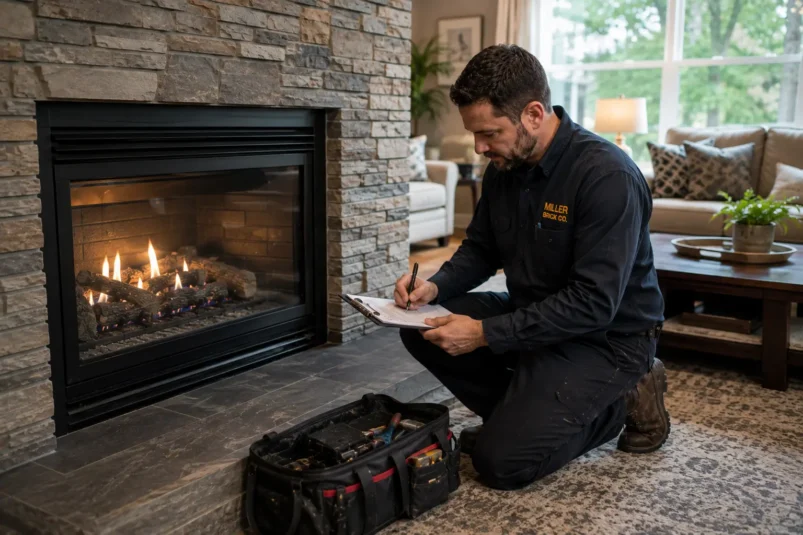
A gas fireplace doesn’t need the chimney sweeping a wood-burning unit does and that convenience is exactly what leads most homeowners to skip maintenance entirely. The fireplace still lights, so it must be fine. That assumption is how a small pilot problem turns into a stuck valve and how a clogged vent cap turns into a safety issue instead of a five-minute fix. Gas fireplaces need less maintenance than wood ones, not none.
This guide covers what an annual service actually involves, what you can reasonably do yourself, what a professional visit costs and a few things most maintenance articles skip entirely.
How often should a gas fireplace be serviced?
Once a year, minimum, and ideally in late spring or summer while the fireplace is sitting idle. Servicing during the off season means any parts on order arrive well before you need heat again, and it avoids the fall rush when every fireplace company in Rochester is booked out for weeks.
If the fireplace runs daily through the winter, or if it’s your household’s primary heat source in a den or converted porch, a lot of technicians recommend a second, lighter check at the start of the heating season too. That’s not the standard for occasional-use units, but it’s worth mentioning because most guides only mention the single annual visit and skip this distinction entirely.
What’s included in gas fireplace annual maintenance?
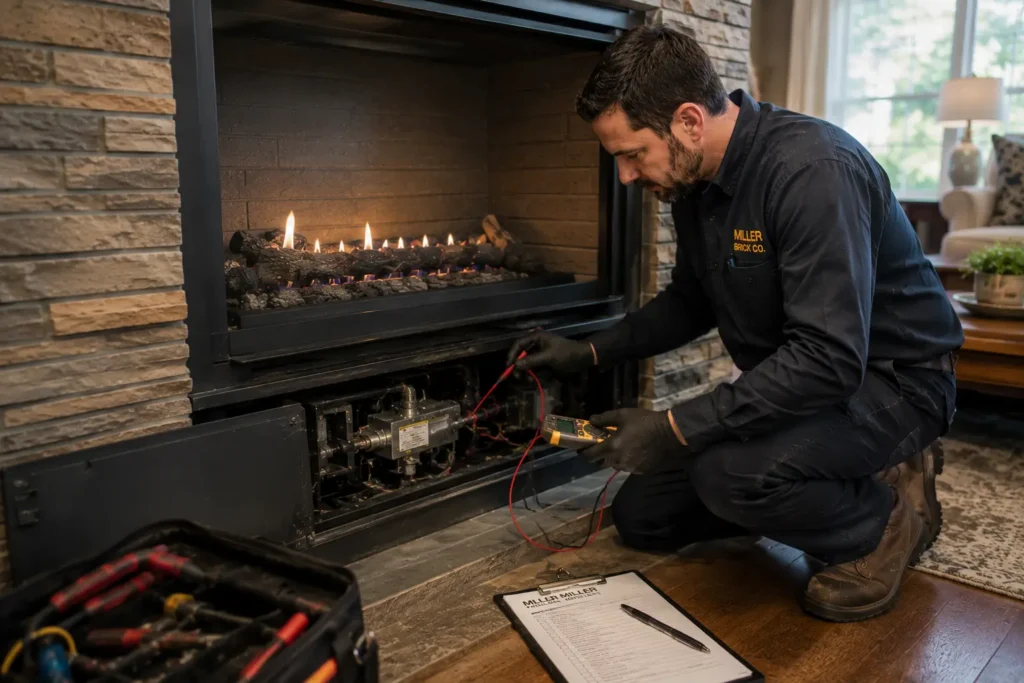
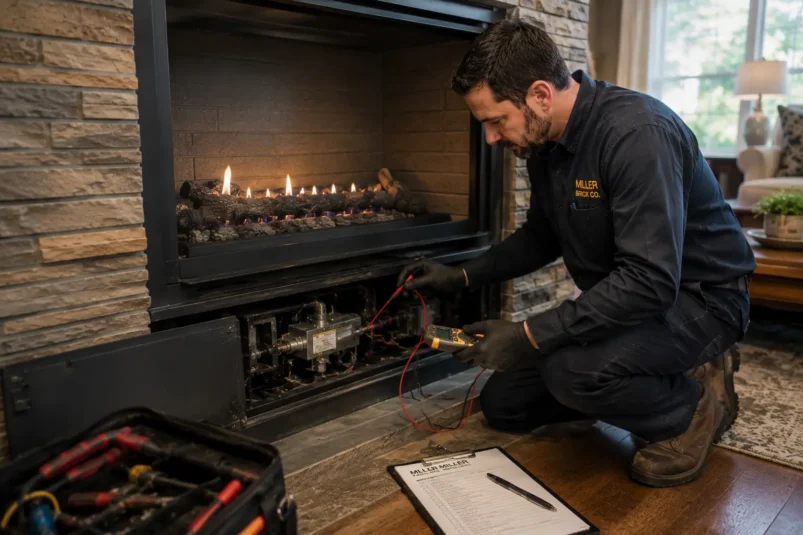
A proper annual service is more than wiping down the glass. A thorough visit covers the burner and pilot assembly, the ignition system, the venting path, the gas connections, the glass and gasket, and the decorative logs or media. Here’s what each part of that actually involves.
The technician removes the logs or media to access the burner directly, then cleans the burner ports and pilot assembly with a soft brush or compressed air to clear dust and spider webs. They’ll inspect the thermocouple or thermopile output with a multimeter rather than just eyeballing the flame, since a weak reading doesn’t always look obviously wrong. The venting system gets checked at both ends, meaning the interior flue connection and the exterior termination cap, since a blocked cap is one of the most common causes of a weak or short-cycling flame. Gas connections and valves get a leak check. The glass gets cleaned and the door gasket gets inspected for compression damage or gaps. Logs get repositioned to the manufacturer’s diagram, since misplaced logs change how the flame burns and can leave soot marks on the glass.
Gas fireplace maintenance checklist
Here’s a practical breakdown of what to check and how often, split between what most homeowners can handle themselves and what’s worth having a technician do.
| Task | Frequency | Who Handles It |
| Wipe down glass and firebox exterior | Monthly during use | Homeowner |
| Deep clean glass, remove haze or film | Twice a year | Homeowner |
| Test CO detectors near the fireplace | Monthly | Homeowner |
| Visual check of pilot flame color and shape | Monthly during use | Homeowner |
| Clear exterior vent cap of debris or nests | Twice a year | Homeowner |
| Soap-bubble gas leak check on visible connections | Twice a year | Homeowner |
| Thermocouple or thermopile millivolt test | Annually | Technician |
| Full burner and pilot assembly cleaning | Annually | Technician |
| Interior flue and combustion chamber inspection | Annually | Technician |
| Gas pressure and valve calibration | Annually | Technician |
Nothing here should feel overwhelming once it’s broken into monthly, twice-a-year, and annual buckets. The monthly items take under five minutes each.
How do you clean a gas fireplace?
Start with the fireplace fully off and the glass cool. Hot glass can crack from thermal shock if the cleaner hits it directly, so give it at least two hours after last use before you touch it.
For the glass, skip anything with ammonia. Standard household glass cleaner leaves streaks on fireplace glass and can damage the ceramic coating some panels have. Use a cleaner made specifically for fireplace glass, or a simple mix of equal parts water and white vinegar for lighter buildup. Apply it, let it sit a few minutes, then wipe with a soft, non-scratch cloth. Stubborn white haze sometimes needs two or three passes.
For the firebox interior, a dry paintbrush or a low-suction vacuum attachment clears dust off the logs and around the burner without disturbing their arrangement. Decorative glass rocks or lava rock media can be lifted out and rinsed separately if they’ve gone dull. Don’t use household cleaning sprays inside the firebox itself, since residue there can affect combustion the next time the fireplace runs.
Why does gas fireplace glass turn white or black?
This distinction matters more than most cleaning guides let on because one of these is normal and the other is a warning sign.
| White or gray haze | Black soot |
| Normal mineral and sulfur deposits from combustion | Sign of incomplete or improper combustion |
| Cleans off with vinegar or fireplace glass cleaner | Often returns quickly even after cleaning |
| More common with propane than natural gas | Can indicate a burner, venting, or air mix problem |
| No safety concern on its own | Warrants a technician visit, not just a cleaning |
If you’re cleaning black soot off the glass every few weeks instead of the usual seasonal haze, that’s not a cleaning problem. That’s a combustion problem, and it’s worth a service call rather than another bottle of glass cleaner.
How do you check a gas fireplace for a gas leak?
Start with your nose and your ears before any tools. Natural gas and propane both carry an added rotten-egg smell specifically so leaks are noticeable, and a hissing or faint whistling sound near a connection is another giveaway. If either of those shows up, don’t run the soap test. Shut off the gas at the valve, leave the house, and call your gas utility or 911 from outside.
For a routine check with no obvious signs of a problem, mix a few tablespoons of dish soap into a cup of water. Brush or spray the solution onto the visible gas line, the shutoff valve, and the connection fittings, then watch for bubbles. Bubbles forming and growing means gas is escaping at that spot. A single small bubble that doesn’t grow can sometimes mean a loose fitting rather than a real leak, but treat any bubbling as reason to call a technician rather than tightening it yourself and hoping.
Run this check twice a year, alongside the glass cleaning. It takes about five minutes and it’s the single most important item on this whole list.
What does gas fireplace service cost?
A standard annual inspection and cleaning typically runs $100 to $250, depending on your market and whether the technician needs to access hard-to-reach venting. That price usually covers the full checklist above: burner cleaning, thermocouple testing, gas connection check, and glass service.
If the visit turns up an actual repair need, costs shift based on the part. A pilot light or thermocouple repair generally lands in the $100 to $350 range including labor. A gas valve or blower motor replacement runs higher, often $300 to $1,000 depending on the part and the fireplace model. None of these numbers include emergency or after-hours rates, which most companies charge a premium for.
The math that matters most: a $150 annual service call is cheap insurance against a $600 mid-winter repair, and it’s the difference between catching a weak thermocouple in July versus discovering it doesn’t work the first cold night in November.
What should you do yourself vs call a professional?
Cleaning the glass, dusting the firebox, testing CO detectors and running the soap-bubble leak check are all reasonable DIY tasks. They don’t require opening the gas valve, disconnecting anything, or working inside the combustion chamber.
Thermocouple testing with a multimeter, burner disassembly, gas pressure adjustment and anything involving the control valve should go to a licensed technician. It’s not that these are impossible for a determined homeowner. It’s that a mistake in any of them creates a carbon monoxide or gas safety issue rather than just a cosmetic one and manufacturer warranties on units like Heatilator, Heat & Glo and Majestic typically require documented service by an authorized provider to stay valid in the first place.
What most maintenance guides leave out?
A few things worth knowing that don’t show up consistently across the maintenance articles out there. CO detectors have an expiration date, usually 5 to 7 years from manufacture, printed on the back of the unit. Testing the button monthly only confirms the alarm circuit works, not that the sensor itself hasn’t aged out. Check that date, not just the test button.
Keep a simple record of service dates and what was done. Beyond the warranty documentation issue mentioned above, a written maintenance history matters if you ever sell the house or file an insurance claim related to the fireplace. A sticky note in a kitchen drawer with the date and technician’s name is enough.
Propane units tend to build glass haze faster than natural gas units because propane combustion produces more moisture. If you’re cleaning the glass every month and a friend on natural gas cleans theirs twice a year, that’s not a sign something’s wrong with your unit. It’s just the fuel type.
And if your fireplace runs on a remote or wall switch rather than a manual knob, check the batteries during your seasonal service too. A dead remote battery gets mistaken for a fireplace malfunction more often than you’d expect and it’s the fastest possible fix on this entire list.
Make gas fireplace maintenance simple with miller brick
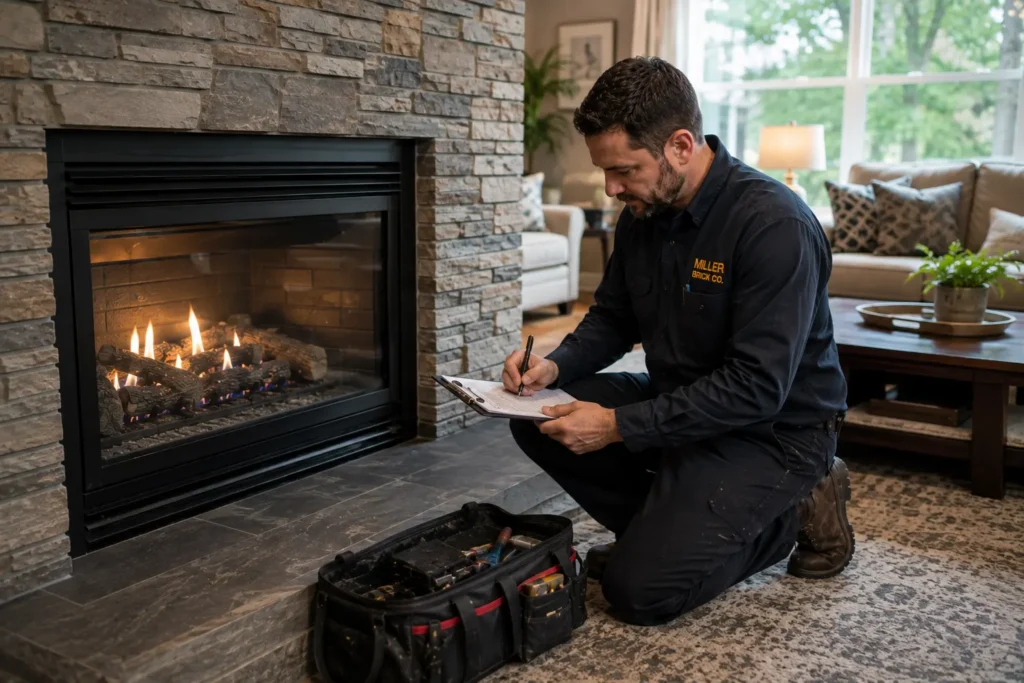
Most of what turns into an emergency service call in January was visible in July. A weak pilot flame, a slightly cloudy reading on a thermocouple test, a vent cap with the first signs of debris. Working through this checklist once a year catches those early and it’s a lot cheaper than a mid-winter repair with no fireplace running in the meantime.
If it’s been longer than a year since your last professional visit, or if you’ve never had one, we run a fireplace maintenance program for Heatilator, Heat & Glo and Majestic units and can get your unit properly checked before the weather turns. For anything more specific, we’ve also put together dedicated guides on why a pilot light won’t stay lit and why a fireplace runs but won’t heat the room. Call us at (585) 458-7745 to get a service visit scheduled.
FAQs
Can I run my gas fireplace without ever servicing it?
You can, for a while, but you’re trading a small annual cost for a larger unknown risk. Gas fireplaces fail quietly. A weak thermocouple or a partially blocked vent doesn’t usually announce itself until the pilot won’t relight or the flame won’t hold and by then you’re troubleshooting in the cold instead of during a scheduled visit.
Do gas fireplaces need chimneys sweeping like wood fireplaces?
No, gas combustion doesn’t produce the creosote buildup that makes wood-burning chimney sweeps necessary. The venting system still needs an annual check for blockages and corrosion, but it’s a different service than a traditional chimney sweep.
Should I turn off the pilot light during the summer?
Many owners do, mainly to save a small amount of gas and to keep dust and spider webs from building up in the pilot assembly while it’s not in regular use. It’s optional, not required and either approach is fine as long as the annual service still happens.
What’s the difference between annual maintenance and a repair visit?
Annual maintenance is preventive: cleaning, testing and inspection with no known problem. A repair visit means something specific has already failed. Sticking to the annual schedule is what keeps most repair visits from happening in the first place.