
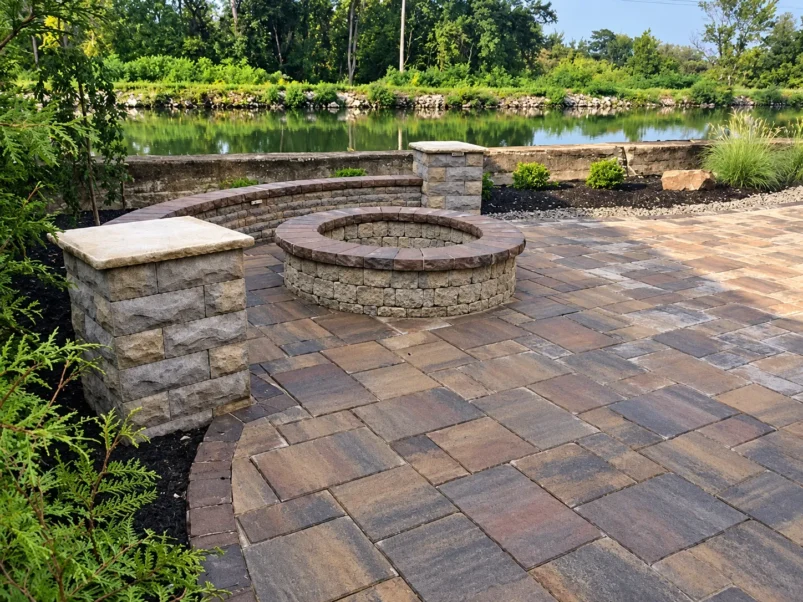
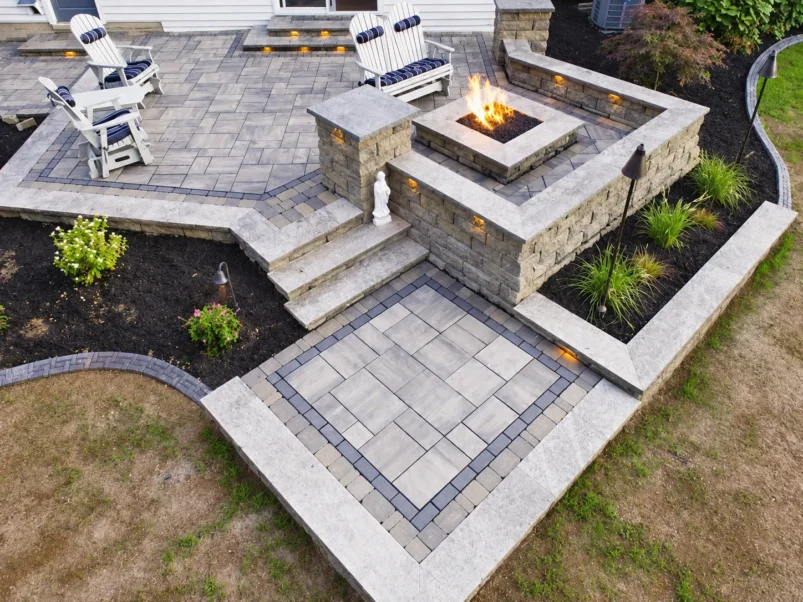
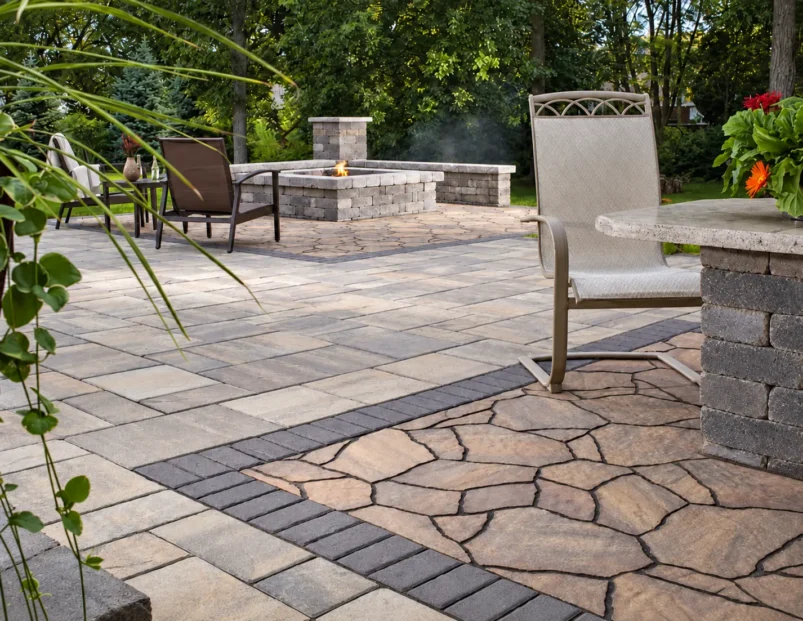
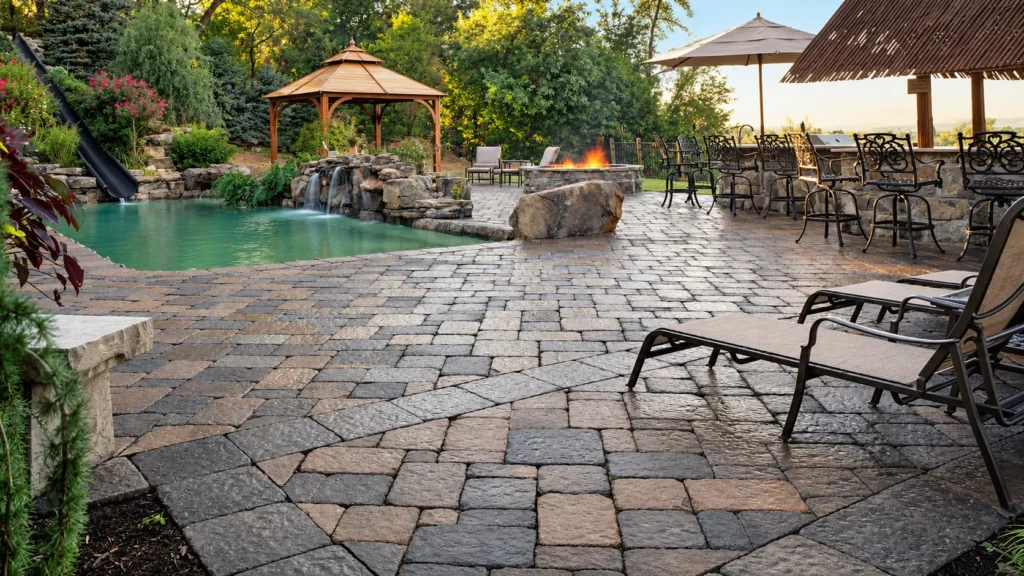
A wood-burning fire pit suits evenings when building and tending the fire is part of the enjoyment. Gas suits homeowners who want easier startup and less cleanup. The right choice depends on how often you spend time outside, the atmosphere you prefer and what your backyard needs for installation.
Before choosing a style or finish, compare the practical differences. Fuel affects everything from smoke and storage to project costs and maintenance.
Wood-Burning vs. Gas Fire Pits at a Glance
Both options create a place to gather but the routine around them is different.
| Consideration | Wood-Burning Fire Pit | Gas Fire Pit |
| Starting the fire | Requires dry wood, kindling, and time | Uses match-lit, push-button, or electronic ignition, depending on the model |
| Atmosphere | Crackling logs and wood aroma | Controlled flames without burning logs |
| Smoke and ash | Produces smoke, embers, and ash | No wood smoke or ash |
| Fuel supply | Suitable firewood and dry storage | Propane supply or natural gas connection |
| Upkeep | Ash removal and component inspection | Burner-area cleaning and component inspection |
If tending a fire sounds enjoyable, wood is worth considering. If preparation would stop you from using the patio on a weeknight, gas may be more practical.
Wood-Burning Kits and Gas Fire Pit Options
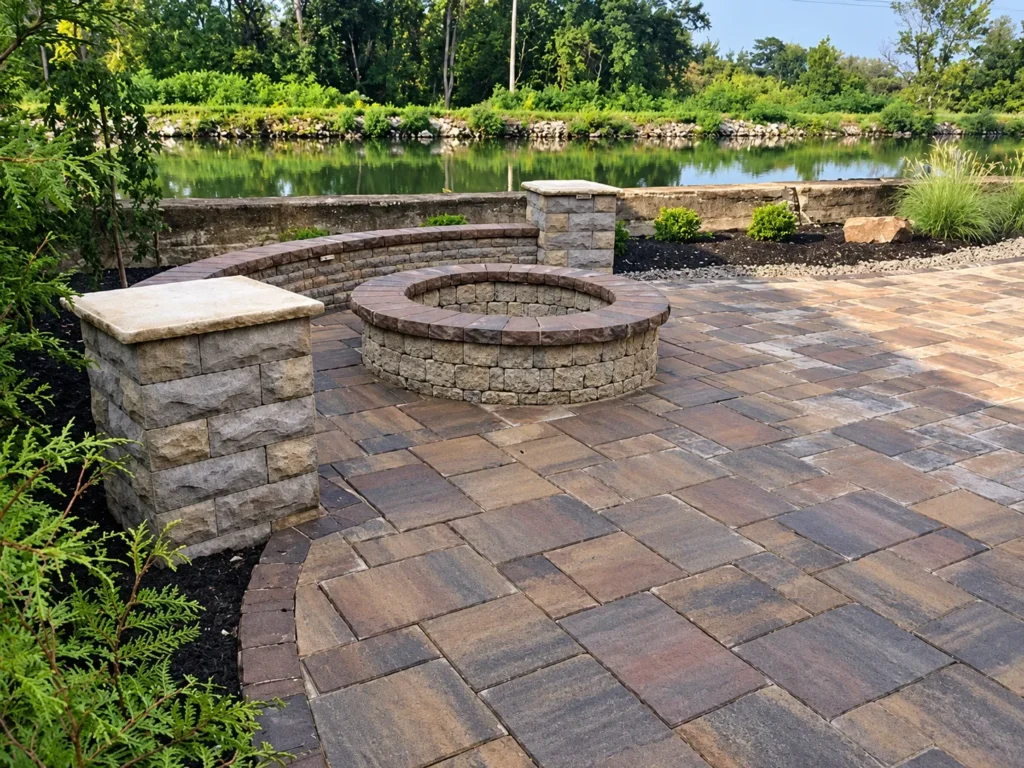
Miller Brick offers wood-burning kits and several HPC gas options. The difference involves both the fuel you use and how the fire pit is assembled.
Wood-Burning Fire Pit Kits
Miller Brick supplies wood-burning kits from Belgard, Cambridge, Techo-Bloc and Unilock. These brands offer different finishes, block sizes, and styles, allowing you to coordinate the fire pit with your patio.
You can consider a DIY kit build or work with a contractor. Miller Brick supplies the materials and can help you compare the available options.
Gas Inserts and Complete Enclosures
An HPC gas insert contains the burner and ignition system, designed to fit into a suitable base built by you or your contractor. An enclosure includes the surround and burner, requiring less construction than building the base from scratch.
Miller Brick also offers ready-to-assemble and custom-built options through HPC’s outdoor line. Comparing these with a wood-burning kit helps you decide which approach fits your project.
Atmosphere, Smoke and Everyday Use

Wood offers the experience many people associate with a backyard fire. You arrange the logs, watch the flame develop, and add fuel as the evening continues. It takes more attention, but that involvement can be part of its appeal.
Smoke needs consideration before installation. Wind can carry it toward chairs, windows, or a neighboring yard. Dry, seasoned wood helps reduce excessive smoke, but it does not eliminate it. You also need to extinguish the fire properly and handle the remaining ash once it has fully cooled.
Gas makes shorter visits outside easier. There is no firewood to collect or ash to remove afterward. The ignition method varies by model, so compare the controls as well as the appearance. You still need to supervise the flame and follow the shutdown instructions.
Installation Costs and Ongoing Expenses
The kit or burner price is only part of the project. A wood-burning kit needs a suitable base and proper assembly. A gas insert needs a compatible enclosure, ventilation, and a correctly sized fuel supply.
An existing patio may reduce some construction work, but its suitability still needs checking. When comparing project estimates, make sure they account for:
- The fire pit kit, or burner and enclosure.
- Base preparation, drainage, and patio alterations.
- Gas connection and electrical provision where required.
- Installation and compatible protective accessories.
Running costs depend on local fuel prices and how often you use the fire pit. Wood requires suitable firewood, propane requires refills or deliveries, and natural gas use is billed through your supply. Compare those costs against your expected use rather than treating either fuel as automatically cheaper.
Backyard Placement, Clearance and Ventilation
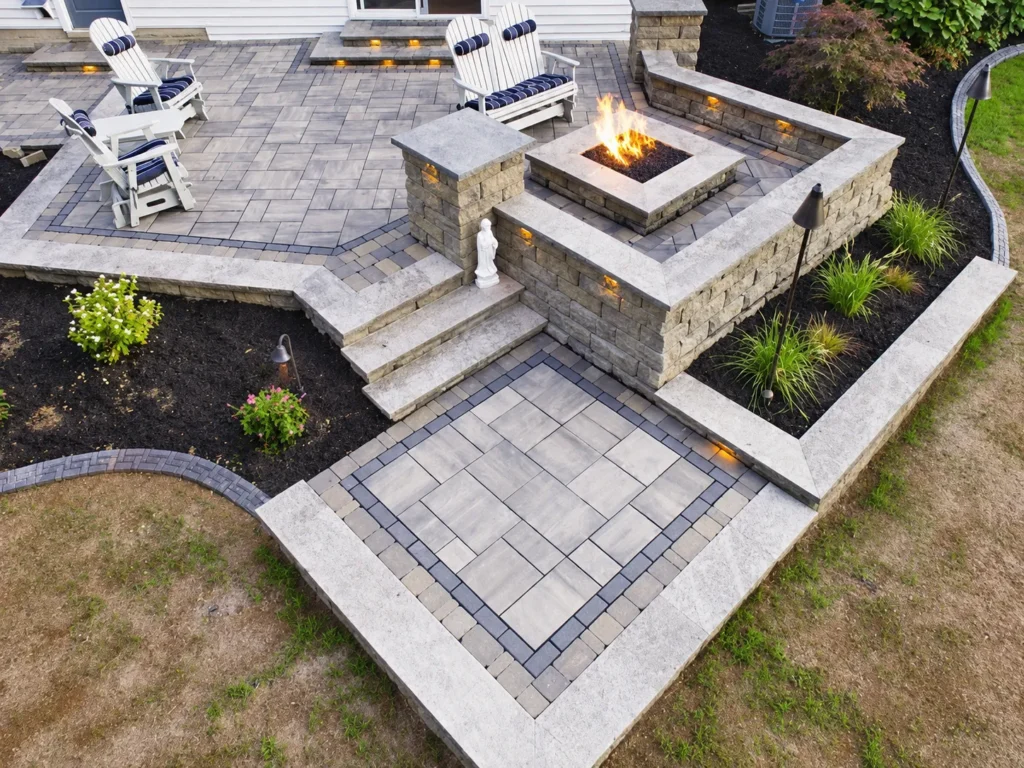
Choose the location before settling on a wood-burning kit or gas fire pit. Miller Brick’s placement guide recommends considering clearance from structures, wind direction, seating space, and a stable, non-combustible base. The fire pit should fit the way people sit and move through your backyard.
Keep surrounding structures and overhead obstacles in mind, including fences, branches, and roof overhangs. Miller Brick advises avoiding enclosed or covered locations unless the specific fire feature is approved for that setup. Use its backyard fire pit placement guide to review the location before finalizing your patio plan
Cleanup and Winter Care
Wood-burning fire pits need regular ash removal to keep airflow clear. Gas fire pits avoid wood ash, but Miller Brick recommends having burner and connection points checked each season. It also carries cleaners and sealers for the stone and paver materials surrounding your fire pit.
For winter protection, Miller Brick’s buying guide recommends fitted covers to help keep moisture away from metal fire pits and gas burners. Clear ash and debris, inspect the fire pit, and follow the selected product’s care instructions before leaving it outside for the season.
Choosing a Fire Pit at Miller Brick
Choose wood if you enjoy preparing and tending a traditional fire. Choose gas if convenient startup and reduced cleanup will help you spend more time on the patio.
Miller Brick supplies wood-burning kits from Belgard, Cambridge, Techo-Bloc, and Unilock, alongside HPC gas inserts and enclosures. You can compare sizes and finishes at the Rochester showroom. Staff can also point you toward a contractor experienced with the brands and gas hookups.
Bring your patio measurements, a photo of the proposed location, and details about your available fuel supply. These make it easier to narrow down a fire pit that fits your space and plans.
Frequently Asked Questions
Is a gas fire pit easier to maintain than a wood-burning fire pit?
Gas fire pits eliminate firewood storage and wood-ash cleanup. They still need maintenance: Miller Brick recommends seasonal checks of burner and connection points. Wood-burning fire pits require regular ash removal to keep airflow clear.
Is a wood-burning fire pit cheaper than a gas fire pit?
The total cost depends on the product and installation. Miller Brick’s buying guide explains that size, materials, and gas-line work affect the budget. Compare the complete project rather than assuming one fuel is always cheaper.
Can I install a fire pit kit myself?
Miller Brick offers wood-burning kits designed for homeowner assembly with standard masonry tools. Larger builds and gas hookups are better handled by a contractor. Miller Brick supplies materials and can recommend a contractor experienced with its brands.
How far should a fire pit be from the house?
The required distance depends on the fire pit, manufacturer instructions, site conditions, and local rules. Miller Brick’s placement guide cites 10 feet from combustible materials as a planning baseline, but the selected product or local requirements may require more clearance.
Can a fire pit go under a tree or covered patio?
Miller Brick advises avoiding low branches, roof overhangs, awnings, and enclosed areas unless the specific fire feature is approved for that setup. Confirm the product’s requirements before choosing a covered location.
Should I cover my fire pit during winter?
Miller Brick’s buying guide recommends fitted covers to protect metal fire pits from winter moisture and rust. It also identifies covers as protection for gas burners. Choose protection appropriate to the selected fire pit’s materials and components.