

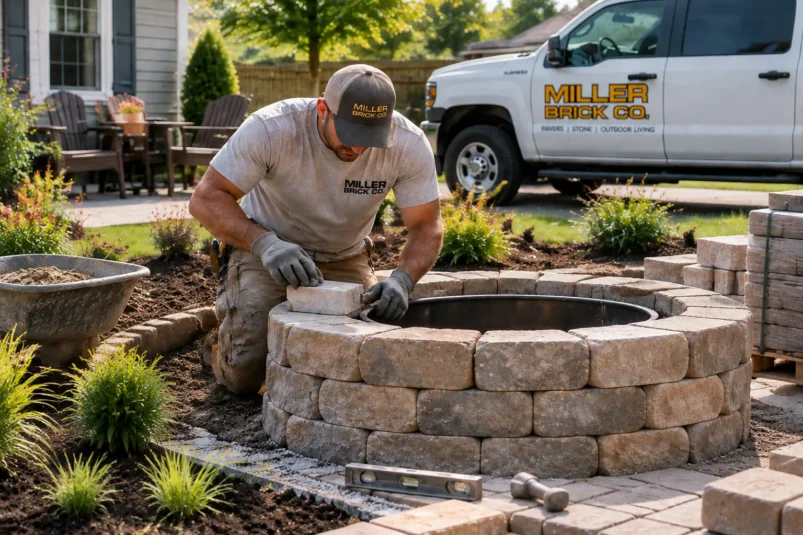
Choosing a fire pit comes down to four decisions: the fuel (wood, natural gas, or propane), the style (pit, table, or bowl), the size for your seating area, and a material that can handle your climate. Get those four right and almost any fire feature will work well for years. Get one wrong, and you’re stuck with something that rusts by spring, smokes out your neighbors, or sits unused because it never fit the patio the way you pictured.
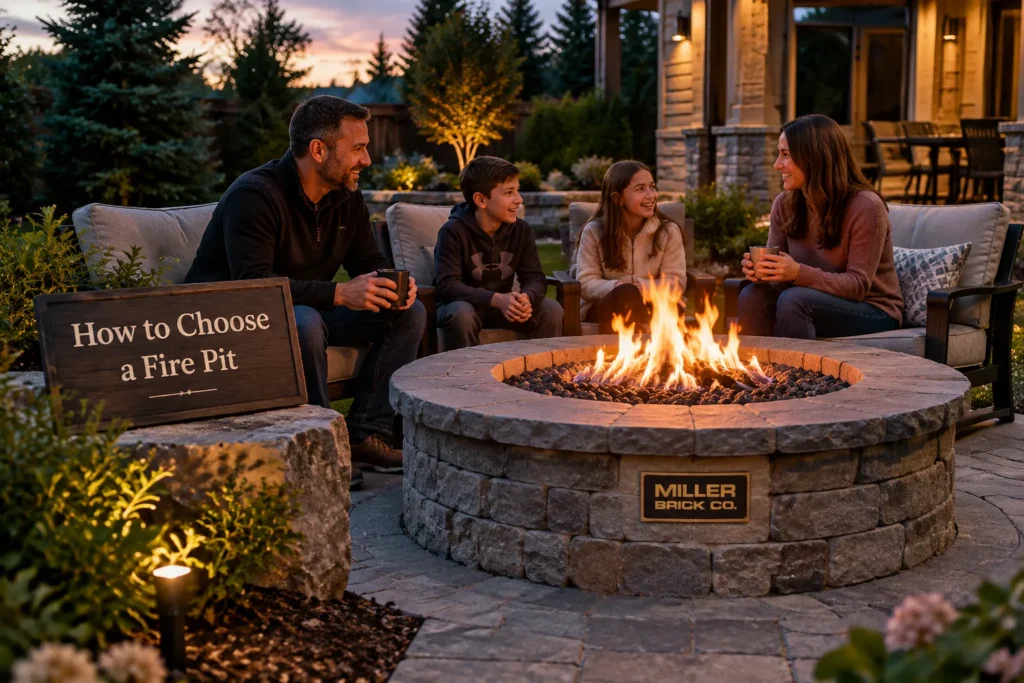
This guide walks through each decision in order, plus the two things most buying guides skip: what a permit actually involves, and which features are worth paying extra for. If you’d rather see the options in person than read about them, Miller Brick’s showroom has several fire pit kits you can compare side by side before you decide.
The difference between a fire pit, a fire table and a fire bowl
A fire pit is the classic version, a round or square bowl-shaped feature that sits low to the ground, built for an open flame you gather around. A fire table adds a wide ledge or a full tabletop around the flame, usually run on gas, wide enough to set down a drink or a plate. A fire bowl is the smallest of the three, often under 36 inches across with little to no ledge. It’s built for ambience and light, not serious heat.
People use these three words interchangeably. They shouldn’t. The difference determines how you’ll actually use the thing once it’s installed.
| Style | Typical Use | Common Fuel | Good For |
| Fire Pit | Gathering around an open flame | Wood or gas | Traditional look, the biggest heat output |
| Fire Table | Entertaining, dining, lounging | Almost always gas | Setting down drinks and food while the fire’s going |
| Fire Bowl | Accent lighting, smaller spaces | Wood, gas, or propane | Patios, balconies, or near a pool |
What types of fire pits can you actually build or buy?
Past the pit-versus-table question, fire pits split a few more ways based on how they’re built and whether they move:
- Built-in or masonry pits: Permanent, set into a paver or stone patio, usually gas-fed with a line run during construction. These become part of the hardships rather than a piece you’d ever relocate.
- Portable steel or cast-iron pits: Freestanding bowls you can pick up and move. Wood or propane fueled and usually the most budget-friendly starting point.
- Fire pit tables: Covered above, almost always gas, furniture-first by design.
- Tabletop or small propane units: Compact enough for an apartment balcony or a small patio table. Low heat output by design.
- Smokeless wood-burning pits: A newer category. A double-wall design burns wood more completely, cutting down on smoke without switching to gas.
A homeowner who mentions a fire pit is often really deciding among these five, not the three styles above. Both questions matter, and they’re not the same one.
Should you choose wood-burning or gas for your fire pit?
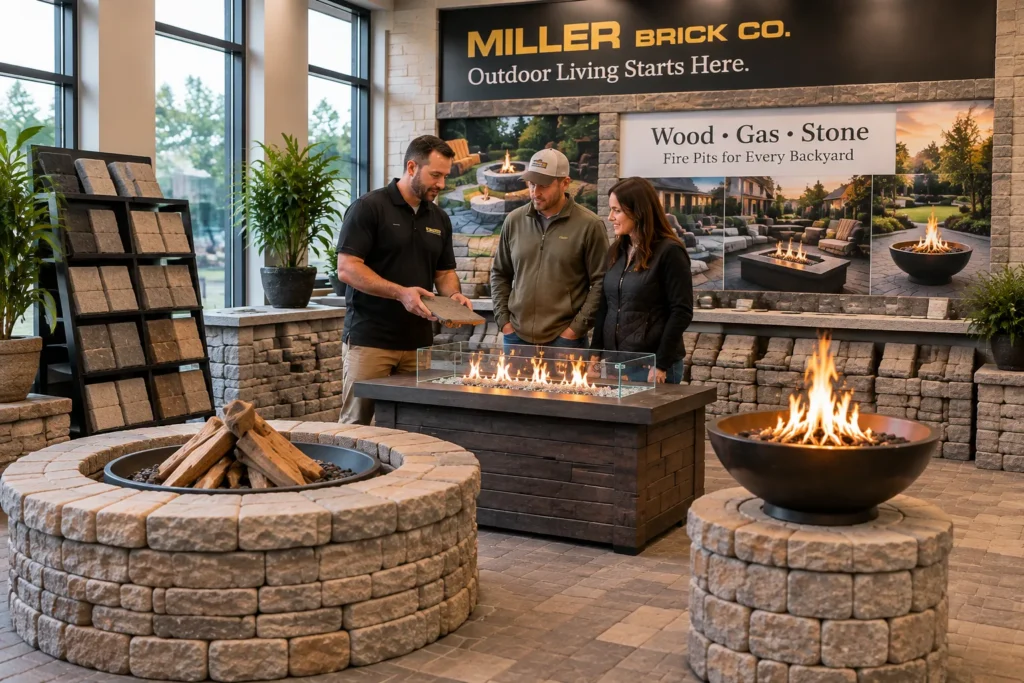
Fuel is the decision that shapes nearly everything else. It drives cost, upkeep, and how the fire actually feels to sit around.
Wood gives you the real thing: the crackle, the smell, the ability to cook over it. It also runs hotter than most gas units, which matters if you want serious warmth on a genuinely cold night. The trade-off is smoke that follows the wind, ash cleanup after every use, and somewhere to store dry wood.
Gas, whether natural gas or propane, trades some of that ambiance for convenience. It starts with a switch, produces no ash, and the flame height adjusts on demand. Natural gas needs a line run from the house, which means it’s typically installed once and stays put. Propane is more flexible since it only needs a standard tank, but you’ll occasionally run out mid-evening and need a spare on hand.
| Fuel | Ambiance | Convenience | Cleanup | Install |
| Wood | Highest, real flame, smell, sound | Lowest, building a fire takes time | Ash and soot after every use | None required, most portable |
| Natural Gas | Moderate, instant flame, less crackle | Highest, on and off with a switch | Minimal | Requires a gas line run |
| Propane | Moderate | High, but tank-dependent | Minimal | No line needed, just a tank |
Neither fuel is the correct one. Weekend campfire nostalgia points to wood; weeknight, twenty-minutes-before-dinner-guests-arrive convenience points to gas.
Which material will hold up in your backyard?
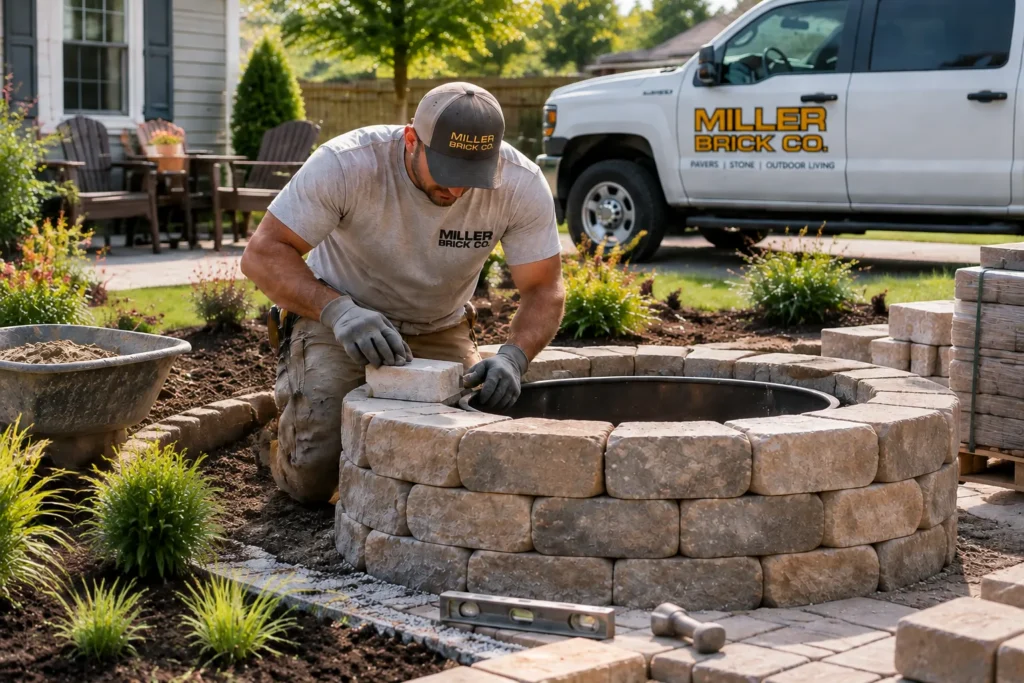
Material affects three things: how long the fire pit lasts, how heavy it is to move and how it looks once it’s weathered a season or two.
- Steel: Lightweight and easy to move but untreated steel rusts unless it’s powder-coated. A good budget option for a portable pit.
- Stainless steel: Holds up much better against rust and rough weather than plain steel, and stays easy to clean. Costs more but it’s the better pick if you’re leaving it outside all winter.
- Cast iron: Heavy, sturdy and holds heat well which makes it a strong performer in cold weather. It’s also less likely to tip over. It does need occasional care to prevent rust.
- Concrete or stone: Common for fire tables and built-in pits. Naturally insulating, so the exterior stays cooler to the touch but it can stain from soot over time and benefits from a sealant.
- Copper: Mostly used for fire bowls. Develops a weathered patina over time that some homeowners like and others don’t worth knowing before you buy.
Choosing the right fire pit material can make a difference in durability, maintenance and how well it complements your outdoor space. Miller Brick can help you find the right fire pit for options that pair with your patio materials and long-term design plans.
What size fire pit fits your seating area?
Size the fire pit to your seating, not to your patio. A common mistake is buying a large pit because the patio has square footage, then finding there’s no room left for chairs once people need three to four feet of clearance around the flame to sit comfortably.
As a rough guide, a smaller patio or a two-to-four-person setup usually works better with a 30 to 36-inch pit. A larger gathering space with six or more seats can support something closer to 40 inches, or a full fire table with built-in seating around it.
Whatever size you land on, mock it up with real chairs in the actual spot before you buy. A tape measure on paper won’t tell you how it feels once people are actually sitting around it.
Do you need a permit or professional installation for a fire pit?
It depends on the type, and it’s worth checking before you commit to a spot. Portable wood-burning and propane pits generally don’t need a permit, though many municipalities still set minimum clearance distances from structures, fences, and property lines. Built-in gas pits with a trenched line usually do require a permit and a licensed installer, since you’re running gas to a fixed appliance.
Rules vary by municipality, so confirm the specifics with your local building department before you finalize a built-in design. A few things hold true almost everywhere: keep the pit well clear of overhangs, siding, and anything flammable, and check whether your homeowners insurance has requirements around permanent fire features before you install one.
This step gets skipped more than any other in fire pit shopping, usually because it’s the least fun part. Skip it anyway and a failed inspection, or a neighbor’s complaint, can cost more than the pit did.
Which features are worth paying for?
Once fuel, material, and size are settled, a handful of features separate a pit you’ll actually use from one that sits half-covered by August:
- Ignition type. Push-button electronic ignition lights a gas pit in seconds. Match-lit units cost less but ask you to kneel down with a long lighter every time, which gets old fast.
- Spark screens. A mesh cover for wood-burning pits that keeps embers from popping onto a nearby deck or dry grass. Cheap insurance, and some homeowners associations require one.
- A fitted lid or cover. Keeps rain out of a gas burner and cuts down on rust, especially for steel and cast-iron units left outside year-round.
- Portability hardware. Wheels or handles on a portable pit matter more than they sound like they would once you’re the one moving a 60-pound steel bowl off the patio for winter.
None of these changes the core decision. They do change whether the pit gets used every week or twice a summer.
How much should you expect to spend?
Prices vary widely by style and fuel. As a general range, simple portable steel pits run well under $200. Mid-range fire tables and cast-iron pits land somewhere in the mid hundreds to low thousands. Fully built-in gas features, the kind with a trenched line and a masonry surround, can run well into five figures once materials and installation are both counted.
These are general market ranges, not a quote, since the real number depends on size, material, and whether a gas line needs to be run.
Which fire pit is right for your backyard?
A 30-inch stainless steel propane fire bowl works well if you have a small patio and just want ambiance, not a full project. It needs nothing plumbed in and nothing permanent.Homeowners who host often usually get more use out of a gas fire table with push-button ignition. It doubles as furniture between fires, not just during them.For a family planning to stay in the house long term, a built-in masonry pit with a trenched gas line makes sense. It costs more upfront, but it becomes the permanent gathering spot for years.
Whichever direction fits, start with the fuel decision. Everything else, size, material, and features, narrows down from there.If you’re narrowing down which style fits your outdoor space, Miller Brick’s fire pit kits are worth a look in person before you settle on one. Seeing the scale and finish of a pit next to real patio materials tells you more in five minutes than another round of photos will.
FAQ
Does a fire pit affect your homeowners insurance?
A portable fire pit is usually treated as personal property but a built-in fire pit may fall under your policy’s other structures coverage which can affect your premium or your liability coverage if someone is hurt. Talk to your insurance agent before installing a permanent fire feature and keep a record of the materials and fuel type used.
Is it safe to put a fire pit directly on grass?
Not without a barrier underneath it. Radiant heat from a fire pit, especially a wood-burning one, can scorch or kill grass in a ring around the base even if the pit itself never touches the lawn. A raised pad of pavers, gravel, or stone under the pit protects the grass and gives the pit a more stable, level surface to sit on.
How do you keep a steel or cast-iron fire pit from rusting?
Rust forms when iron meets oxygen and moisture, not from the heat of the fire itself, so the fix is keeping water off the metal. A waterproof cover, a few inches of clearance between the pit and the ground and wiping it down once it’s cool are usually enough to keep a steel or cast-iron pit rust-free through a Rochester winter.
Should you cover or store a fire pit in the off-season?
For metal fire pits, yes. Leaving a fitted, waterproof cover on through the winter prevents the standing moisture that causes rust, and it’s a far cheaper habit than replacing a pit that’s rusted through after one wet season. Stone and concrete fire tables hold up fine uncovered, though a cover still helps prevent soot staining.
Can you cook over a fire pit?
A wood-burning fire pit can double as a cooking fire if you add a grate, though most models aren’t built with cooking as the primary purpose. Gas fire pits and fire tables generally aren’t meant for direct cooking, since the flame sits under decorative fire glass or lava rock rather than an open surface. If cooking matters to you, look for a fire pit sold specifically with a grill grate accessory.