
A gas fireplace can light correctly and still leave a room cold and that almost always comes down to one of six things: the burner, the gas pressure, the vent, the thermostat, the blower or the door seal. Nothing mysterious about it, just a specific part not doing its job. Some of these you can check yourself in a few minutes, others are worth a technician’s second look. This guide walks through each one so you can figure out which part is actually causing your problem and fix it.
Burner ports clogged with soot or dust
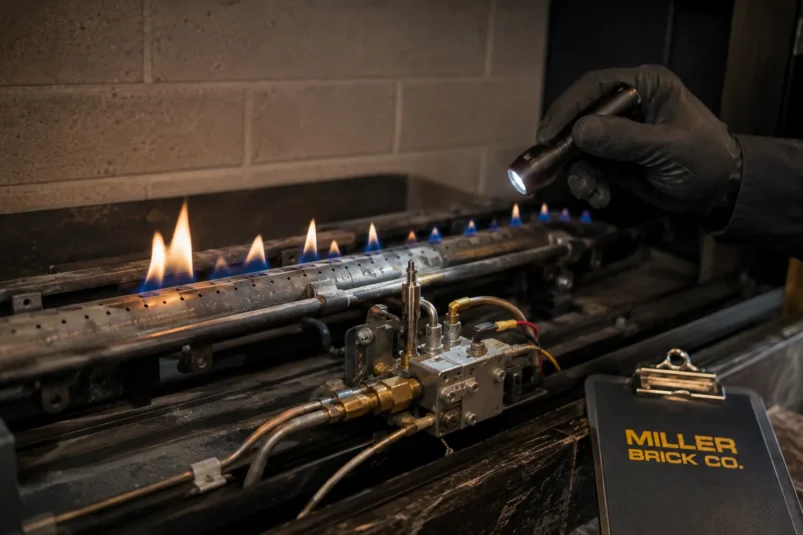
Look at the flame pattern first. A healthy gas burner produces even, consistent flames across the entire burner tube. If you see gaps, uneven height, or flames that lean or sputter in certain spots, some of the burner ports are partially blocked. Dust settles into these units over the off season, and combustion byproducts leave a fine soot layer that narrows the openings gas passes through.
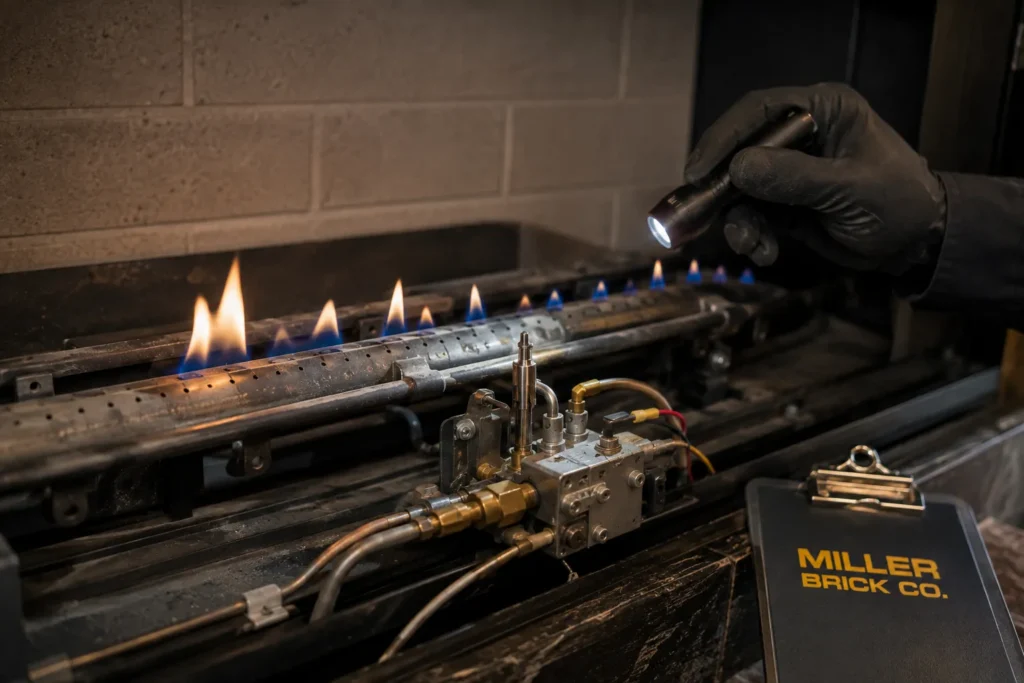
A partially clogged burner still lights and still burns gas, it just can’t distribute the flame evenly enough to produce full heat output. This is one of the most common reasons for a fireplace that “works” but underperforms. Cleaning the burner assembly means shutting off gas, removing the burner and clearing each port with a soft brush or compressed air. On direct vent units, this is a job we’d rather send a technician to than have a homeowner pull glass and venting components apart.
Why is the gas pressure running low?
Every gas fireplace is designed to run at a specific manifold pressure, usually somewhere around 3.5 inches water column for natural gas and higher for propane. When pressure drops below spec, the flame shrinks and the BTU output drops with it. You’ll notice this as a flame that looks smaller than it used to, or one that used to roar and now barely flickers even at full setting.
A few things cause low pressure. A failing regulator inside the gas valve is the most common in older units. A partially closed shutoff valve behind the fireplace is the easiest to check yourself. And if multiple gas appliances run off the same line, like a furnace and a water heater both firing at once, you can see a temporary pressure dip that shows up as a weaker flame during peak demand. Measuring manifold pressure requires a manometer and access to the test port on the valve, which is a technician-level check rather than a DIY one.
Is the vent blocked or restricted?
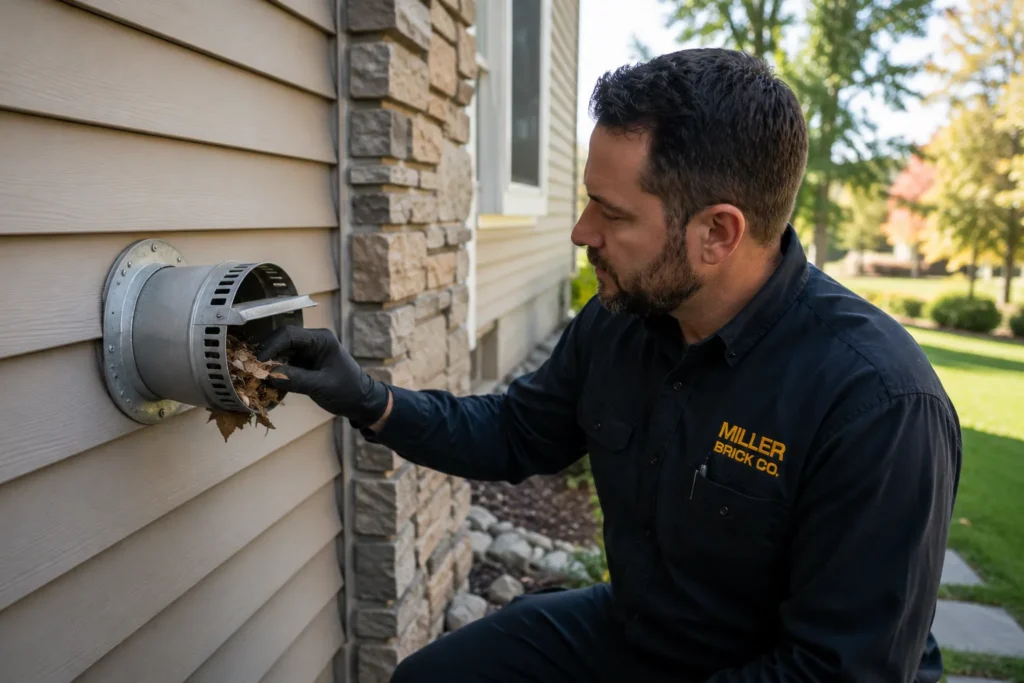
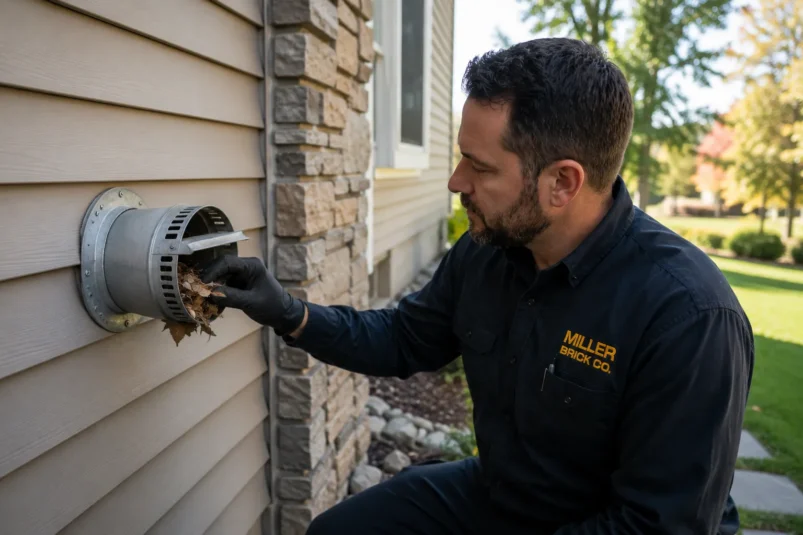
Direct vent gas fireplaces pull in combustion air and exhaust gas through a sealed pipe system, and that system has to move freely in both directions. A bird’s nest, wasp nest, or debris in the exterior termination cap restricts airflow, and the unit compensates by running a smaller, cooler flame as a safety measure. Snow packed against a low termination cap after a storm does the same thing.
Check the exterior vent cap for obstructions before assuming the problem is internal. This is genuinely one of the fastest fixes on this list. Clear the cap, run the fireplace for a few minutes, and see if flame size and heat output come back. If they do, that was the whole issue.
Thermostat placement and calibration
If your unit runs off a wall thermostat rather than a simple on/off switch, the thermostat itself might be the reason the room feels cold. A thermostat mounted too close to the fireplace reads the immediate heat and shuts the burner down early, long before the rest of the room warms up. One mounted on an exterior wall or near a drafty window reads artificially cold air and runs the fireplace longer than needed without ever satisfying the room’s actual temperature.
Compare the thermostat’s displayed temperature against a separate room thermometer placed a few feet away. A gap of more than 3 to 4 degrees usually points to placement or calibration, not the burner or gas supply.
Why blower motor not circulating heat?
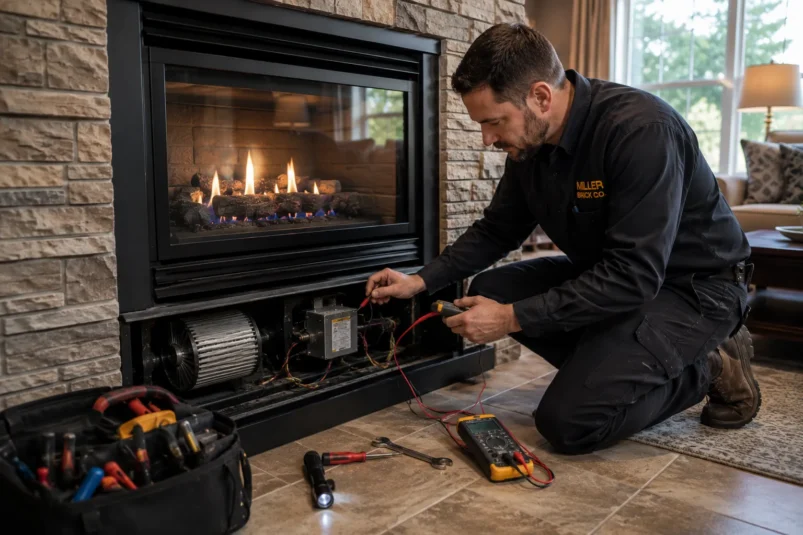
A gas fireplace blower doesn’t affect flame size, but it has everything to do with how much of that heat actually reaches the room instead of staying trapped behind the glass and radiating up the chimney chase. A gas fireplace blower not working means the unit can be burning correctly and still leave the room cold, because the heat isn’t being pushed out into the space.
Listen for the blower when the unit reaches operating temperature, usually a few minutes after ignition. No sound at all points to a dead motor or a tripped thermal switch. A weak, rattling, or intermittent sound usually means dust buildup on the fan blades or a bearing starting to fail. Blower motors are a straightforward swap on most units and don’t require touching the gas system at all.
Could a bad door or glass seal be letting heat escape?
The glass front on a gas fireplace isn’t just cosmetic. It seals combustion air intake and controls how heat radiates into the room versus escaping around the frame. A compressed, cracked, or missing gasket around the glass panel lets warm air leak out along the edges instead of pushing into the room and on some units it also throws off the air-to-fuel mix enough to affect flame quality.
Run your hand carefully along the edge of the glass frame while the unit is running, well clear of the glass itself and feel for warm air escaping around the perimeter. A worn gasket is inexpensive to replace and is often overlooked because the flame still looks fine even with a bad seal.
Why gas fireplace flame low on the highest setting?
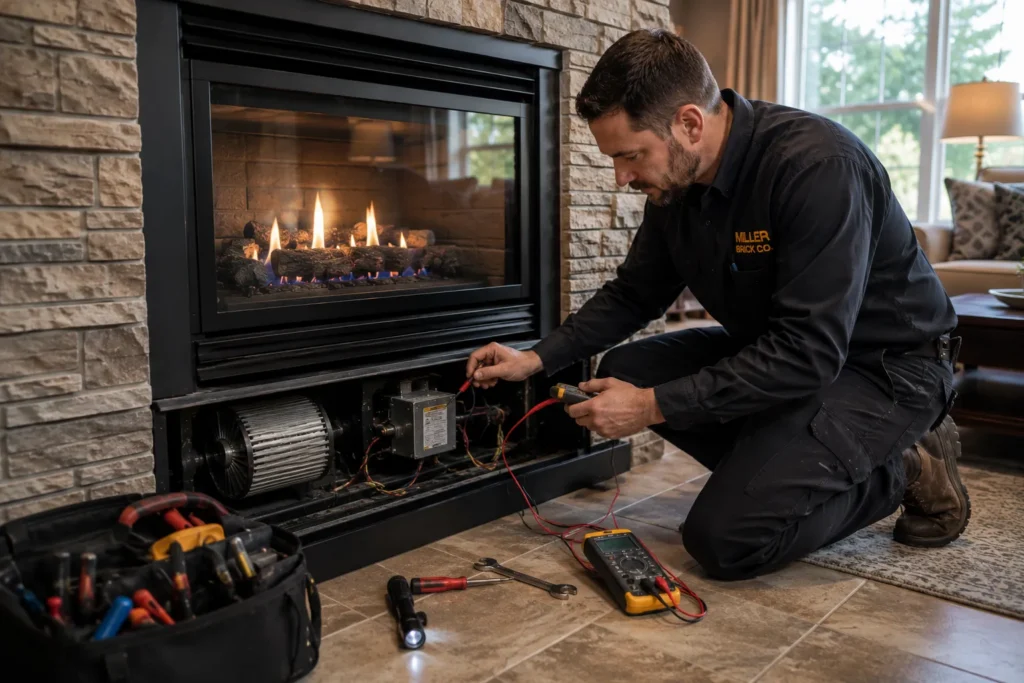
If you’ve checked pressure and the burner ports and the flame is still small, look at the control valve dial itself. Some units have a separate flame-height adjustment screw inside the valve compartment and it’s not uncommon for this to get bumped or turned down slightly during a previous service visit or a DIY cleaning attempt. It’s a small adjustment, and it’s easy to overlook since most people assume flame height is only controlled by the main knob.
FAQs
Why is my gas fireplace flame too low even on the highest setting?
Usually one of three things: low manifold gas pressure, a partially clogged burner, or a flame-height adjustment screw inside the valve compartment that’s been turned down from a previous service. Check the vent cap for obstructions too, since restricted airflow forces the unit into a smaller, safer flame automatically.
Why does my gas fireplace turn on but not heat the room?
The flame can be burning fine while the heat itself never reaches the room. A dead or weak blower motor, a leaking door gasket, or a poorly placed thermostat are the three most common reasons for this specific gap between “it’s running” and “it’s actually warming the space.”
How do I know if my gas fireplace blower is broken?
Listen for it a few minutes after ignition, once the unit reaches operating temperature. Silence usually means a dead motor or a tripped thermal switch. A rattling or intermittent sound points to dust buildup on the blades or a failing bearing.
Can a dirty burner really reduce how much heat my fireplace puts out?
Yes. A partially clogged burner still ignites and still burns gas, but soot and dust narrow the ports enough that the flame can’t spread evenly across the burner tube. That uneven flame pattern is one of the most overlooked causes of weak heat output.
Why does my gas fireplace run weaker in cold or windy weather?
Snow, ice, or debris packed against the exterior vent termination cap restricts the airflow a direct vent system needs to move exhaust out and pull combustion air in. The unit compensates with a smaller flame as a safety measure. Clearing the cap often brings the flame straight back to normal.
Is a weak gas fireplace flame a sign I need a full replacement?
Rarely. Most weak-flame complaints come down to a clogged burner, low gas pressure, or a blocked vent cap, all of which are repairable. Replacement becomes the more practical option only when the heat exchanger is cracked or the unit has needed repeated repairs over several seasons.
Getting the room warm again
Most “on but not heating” complaints trace back to two or three of these causes stacking together rather than one dramatic failure. A slightly clogged burner plus a thermostat mounted in the wrong spot can feel like a much bigger problem than either issue is on its own. Working through burner condition, gas pressure, the vent cap, thermostat placement, the blower, and the door seal in that order usually narrows it down fast.
If you’ve gone through this list and the room still isn’t warming up the way it should, we handle annual fireplace checkups for Heatilator, Heat & Glo, and Majestic units and can pinpoint what’s actually cutting into your heat output. Call us at (585) 458-7745 to get a technician scheduled.