


A fire pit should fit the way you use your backyard. You might want a small spot for quiet evenings, a place where friends can gather, or a fire feature that becomes part of a new patio.
Start with the space, then choose the fire pit. Its size, fuel type, surrounding materials, and seating arrangement all affect how comfortable the finished area will feel. These fire pit design ideas bring those decisions together, using Miller Brick’s wood-burning kits, gas options, and hardscape materials as a starting point.
Classic Wood-Burning Fire Pit Ideas
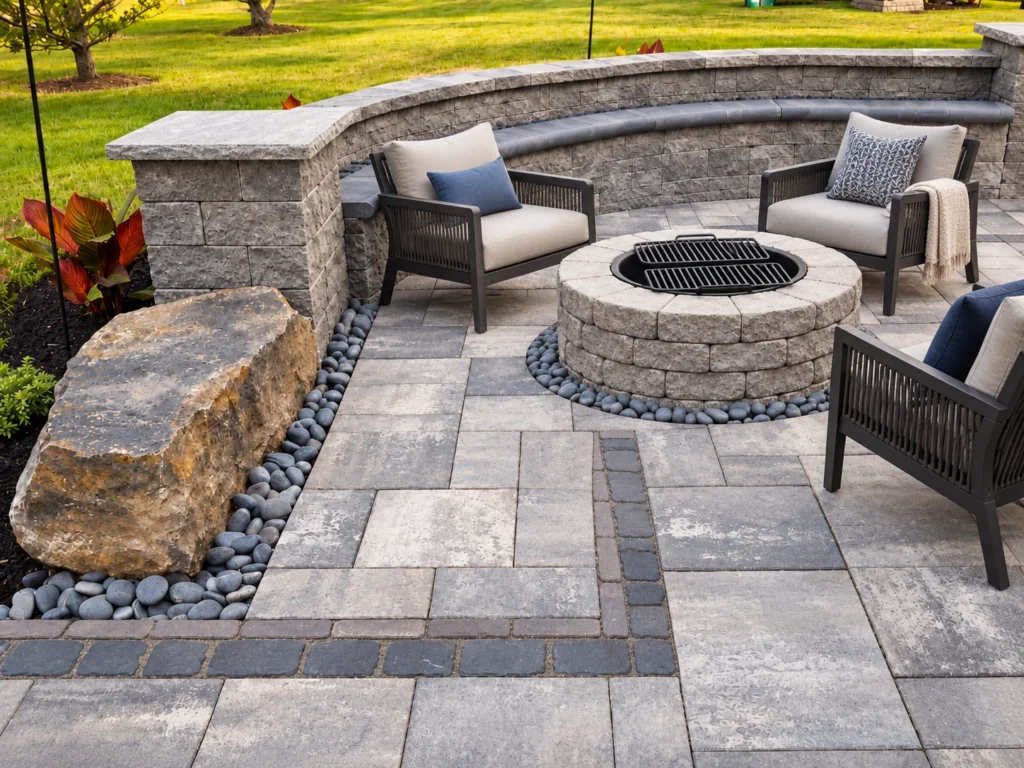
For a traditional gathering area, begin with a wood-burning kit and plan the seating around it. Miller Brick carries kits from Belgard, Cambridge, Techo-Bloc, and Unilock, with different block sizes, finishes, and colors.
Compare the surround with nearby paving rather than choosing it separately. A textured finish might suit the character of an existing patio, while a different block style could help define a new gathering area. Seeing the options together makes the choice easier.Think about the evenings you want to spend there, too. Wood means storing fuel, building the fire, and clearing ash afterward.
Those practical details belong in the design from the beginning. For a traditional backyard, compare a wood-burning kit with brick-style or cobblestone-style pavers. View the block finish beside the paving before choosing the combination.
Modern Patio and Gas Fire Pit Ideas
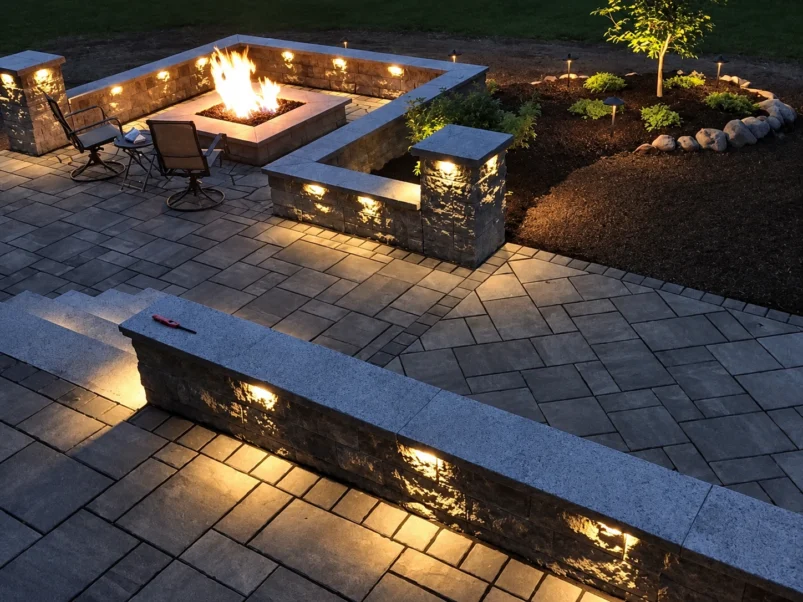
A modern fire pit area can bring together a gas feature and paving with clean lines. Choose the fire feature and surrounding surface together so their proportions work within the same layout.
Gas Fire Pit Inserts
An HPC insert includes the burner and ignition system for a separately constructed base. This gives you a starting point for planning a surround alongside your patio materials. Review the installation requirements before settling on its design.
Complete Gas Enclosures
An HPC enclosure includes both the surround and burner, reducing the construction involved compared with building a separate base. Compare its dimensions and appearance with the seating area you have planned.
Modern Patio Slabs
Large-format slabs offer a contemporary finish with clean lines. Look at their scale beside the proposed fire feature: the paving and surround should feel proportionate to each other and to the backyard. For a contemporary patio, compare an HPC gas enclosure with large-format slabs. Review the surround and paving together to see how their colors, textures and proportions work.
Matching Colors and Materials
The fire pit is one part of a larger view. Your home’s exterior, patio, nearby walls, and landscaping all influence which colors and textures will look at home.
Miller Brick offers brick-style pavers, cobblestone-style pavers, modern slabs, and natural stone. Brick-style paving provides a traditional direction. Large-format slabs suit a more contemporary setting, while natural stone brings texture and variation.
You do not need every surface to look identical. Compare the materials together and decide whether you prefer a close match or a visible difference between the fire pit surround and patio. Keep the overall combination in mind.
Explore Miller Brick’s patio pavers and hardscape materials to narrow your choices. Samples viewed beside your home’s brick or siding can tell you more than separate product photographs.
Fire Pit Ideas for Small Patios
On a small patio, choose the fire pit around the seating you need. A feature that fits within the patio dimensions may still leave too little room once chairs are occupied.
Mark its proposed footprint and put actual chairs around it. Sit down, move the chairs back, and walk through the arrangement. This makes it easier to spot a crowded layout before buying.
Fuel also affects space. Wood needs storage and ash cleanup. Natural gas requires supply-line planning, while propane requires a tank. Include those needs when comparing options.
Miller Brick’s fire pit buying guide explains how fuel, size and materials influence the choice.
Comfortable Seating Around the Fire
Plan the seats at the same time as the fire pit. Movable chairs allow you to adjust the arrangement while a seat wall creates a more permanent gathering area.
Check these details before committing:
- Walking room: Leave enough space behind occupied chairs for people to move comfortably. Guests should be able to reach their seats without passing close to the flame.
- Heat and smoke: Arrange seating with warmth and wind direction in mind. Test the proposed location during the hours you expect to use it to see where smoke could travel.
- Easy access: Keep the route from the house or patio clear. Check that chairs and side tables do not block the approach when everyone is seated.
- Orientation: Think about what people will see from their seats. Face the seating toward the garden or open backyard where the layout allows.
- Seating options: Use movable chairs if you want to adjust the arrangement for different gatherings. Consider a seat wall if you prefer seating that forms part of the hardscape.
Before finalizing the layout, set out temporary chairs around the proposed fire pit. Check how the space feels when people are sitting and moving through it.
Lighting the Fire Pit Area
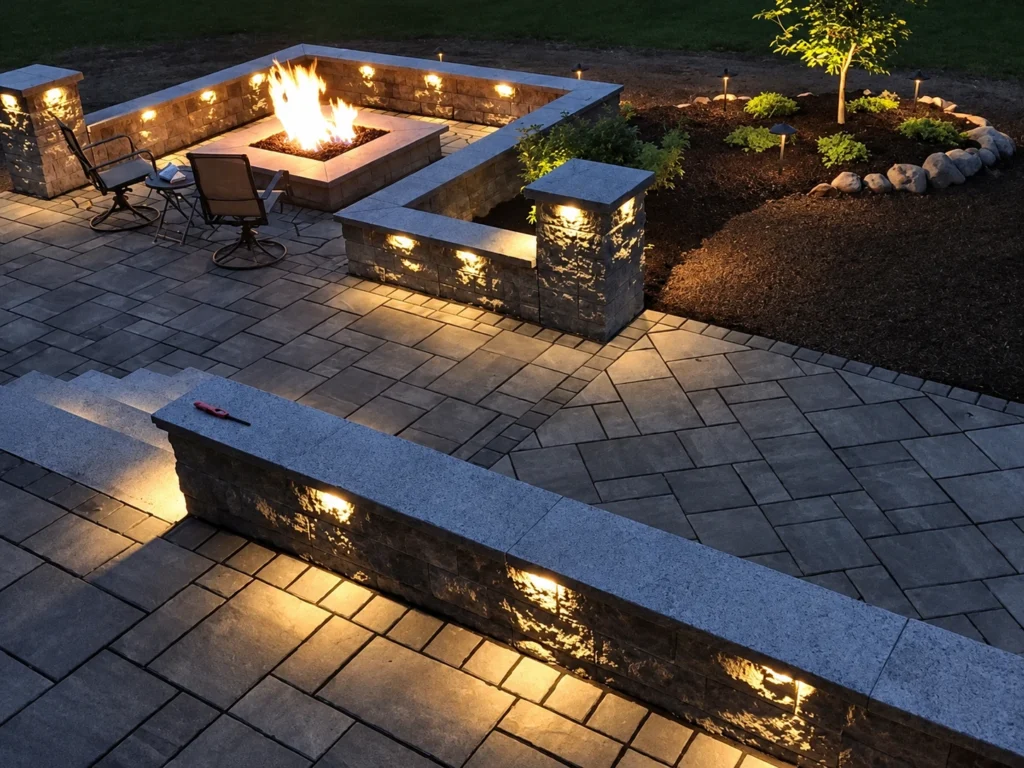
Plan lighting around the approach and surrounding hardscape as well as the gathering area itself.
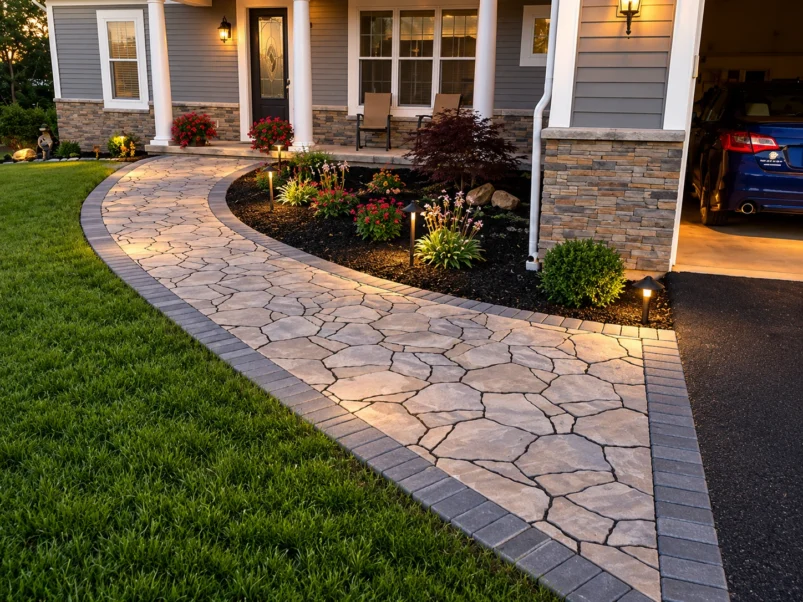
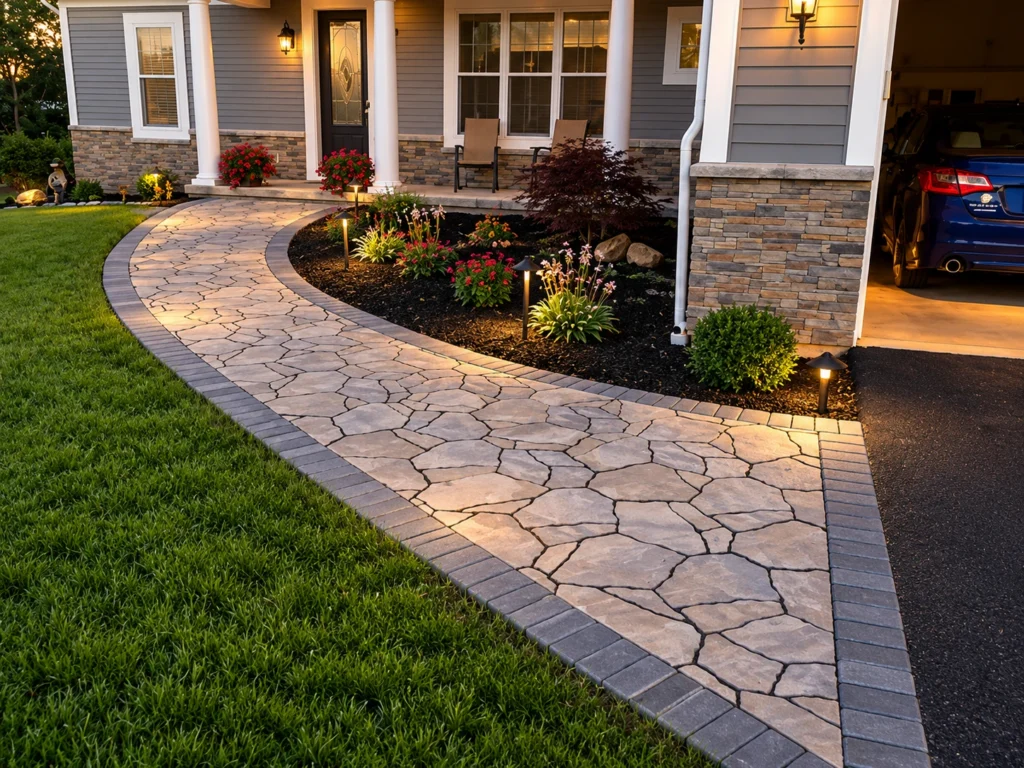
Miller Brick stocks low-voltage LED landscape lighting, including path lights, column lights, paver inserts, and wall flood lamps. Path lighting can illuminate the route to the patio. Paver inserts and wall fixtures offer other ways to incorporate lighting into the finished space.
Include lighting early when planning a new patio. For an existing backyard, consider where additional illumination would make the space easier to use after dark. Miller Brick offers options for both situations.
Choosing the Right Location
If you already have a paver patio, confirm that the surface and base meet the selected fire pit’s installation requirements. Existing paving alone does not establish suitability; follow the manufacturer’s guidance before deciding whether changes are needed. Check the location before finalizing the appearance. A fire pit needs a stable, level, noncombustible base, with drainage and heat exposure considered.
Review the proposed spot for:
- Clearance: Check nearby structures and combustible materials.
- Overhead hazards: Look for branches, awnings, and roof overhangs.
- Wind: Observe the breeze when you expect to use the area.
- Drainage: Avoid overlooking places where water collects.
- Walking paths: Keep regular routes clear of the fire feature.
- Requirements: Follow product instructions and confirm applicable local rules.
Use Miller Brick’s backyard fire pit placement for a closer look at these planning decisions.
Compare Your Options at Miller Brick
Miller Brick supplies fire pit and hardscape materials and can recommend contractors familiar with its brands. Discuss installation needs alongside your material choices, particularly when the project involves a gas hookup. Bring backyard photographs, rough measurements and a few inspiration images to Miller Brick’s Rochester showroom. You do not need a finished design to begin comparing materials.
Review fire pit finishes alongside pavers, slabs and stone. Ask about product availability, delivery and contractor options where professional installation is needed. Comparing the pieces together helps you move from an idea to a material plan that suits your space.
FAQ
Can I choose a custom fire pit size or shape?
Miller Brick’s HPC outdoor line includes custom-built options alongside ready-to-assemble kits. If a standard design does not suit your project, discuss the size and shape you need with the team before finalizing the surrounding patio.
Can I install a fire pit kit myself?
Many Belgard, Cambridge, Techo-Bloc, and Unilock kits are designed for homeowner installation with standard masonry tools. Larger builds, gas line hookups, and HPC commercial-grade inserts are better handled by an authorized contractor. Miller Brick supplies the materials and can recommend contractors familiar with its products.
Can I cook on a backyard fire pit?
Some wood-burning fire pits can be used for cooking with a suitable grate. Miller Brick’s buying guide recommends choosing a model sold with a grill-grate accessory if cooking matters to you. Gas fire pits and fire tables generally are not intended for direct cooking. Check the selected model’s instructions before using it for food preparation.
Should I cover my fire pit during winter?
Miller Brick’s buying guide recommends a fitted waterproof cover for metal fire pits during the off-season to limit moisture exposure and rust. A cover can also help reduce soot staining on stone and concrete fire tables. Follow the care instructions for your particular fire pit.
What maintenance does a gas fire pit need?
A gas fire pit needs seasonal checks of its burner and connection points. Miller Brick also carries cleaners and sealers for the surrounding stone and pavers. Include these checks in your upkeep plan, even though a gas fire pit does not produce wood ash.