
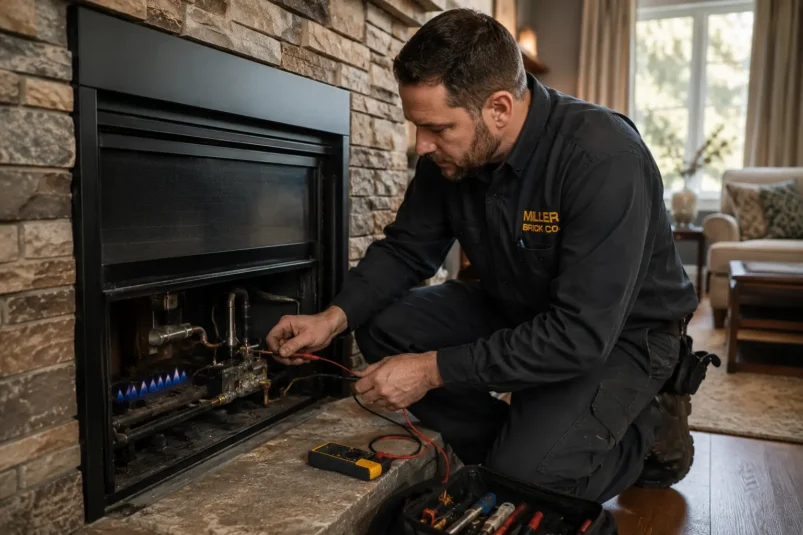
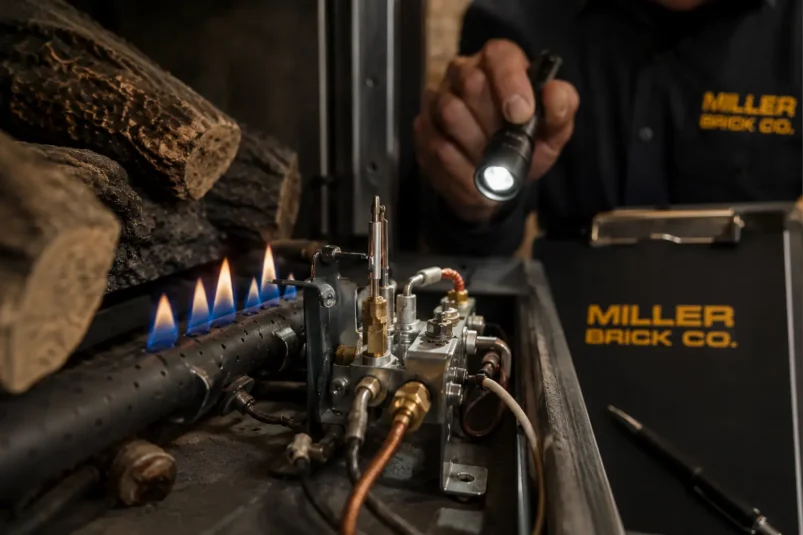
A pilot light that won’t stay lit almost always comes down to one of three things: a weak thermocouple, a dirty pilot assembly, or a draft blowing the small flame out before it can do its job. The good news is that most of these are simple to diagnose and a few you can fix yourself. The ones that involve gas components are worth handing to a technician.
What’s keeping pilot flame lit?
The pilot flame isn’t just decorative. It heats a small safety sensor that tells the gas valve it’s safe to keep the gas flowing. Two types of sensors do this job and knowing which one your fireplace uses matters when you’re troubleshooting.
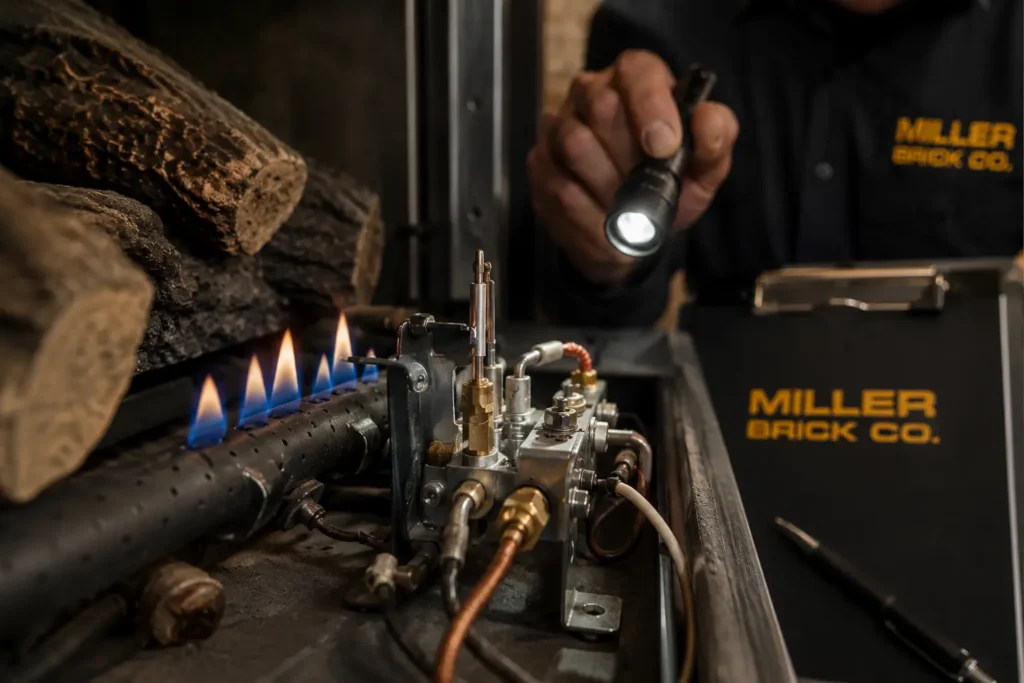
A thermocouple is a thin metal rod that sits directly in the pilot flame. Heat from the flame generates a tiny electrical signal, just enough to hold a small safety valve open. A thermopile does the same basic job but generates a stronger signal, strong enough to power the whole gas valve, including remote controls and wall switches. If your fireplace has a remote or a wall switch instead of a manual knob, it almost certainly runs on a thermopile.
| Feature | Thermocouple | Thermopile |
| works | Holds pilot gas valve open | Powers the main gas valve |
| Output | Small millivolt signal | Higher millivolt signal |
| Found on | Standing-pilot units, manual knob controls | Units with a wall switch or remote |
| Failure symptom | Pilot won’t stay lit | Pilot lights but main burner won’t fire |
In short, a bad thermocouple usually keeps the pilot itself from staying lit. A bad thermopile more often lets the pilot burn fine while the main flame refuses to turn on.
Common reasons a pilot won’t stay lit
Once you know what’s supposed to happen, the usual culprits make more sense.
A weak or failing thermocouple: These wear out over years of heat cycling. If the pilot lights and holds while you press the knob, then dies the second you let go, this is almost always the cause.
A dirty pilot orifice or flame sensor: Dust, spider webs, and soot buildup are common, especially in fireplaces that sit unused for months at a time. A partially blocked orifice starves the flame or bends it away from the sensor, so the sensor never gets hot enough to hold the valve open.
Drafts: A gust down the chimney or through a poorly sealed glass door can snuff a pilot before the sensor heats up. This is more common on windy days or in units with damaged door gaskets.
Low or inconsistent gas pressure: Rare, but it happens, particularly with propane tanks running low or a partially closed shutoff valve.
A misaligned thermocouple: If the rod isn’t sitting directly in the flame, it won’t heat up fast enough, even if the part itself is fine.
How to relight a gas fireplace pilot light?
Every unit is slightly different, but the process is generally the same. Check your owner’s manual for model-specific instructions before starting, and stop immediately if you smell gas.
Turn the gas control knob to “off” and wait five minutes to clear any residual gas. Then turn the knob to “pilot” and press it down. While holding it down, use the igniter button or a long lighter to light the pilot through the access port. Keep holding the knob for 30 to 60 seconds after the flame catches. This gives the thermocouple or thermopile time to heat up and take over. Release the knob slowly. If the flame stays lit, turn the knob to “on.” If it goes out the moment you release it, the sensor isn’t heating fast enough, and that points back to one of the causes above.
5 fixes when the pilot won’t stay lit
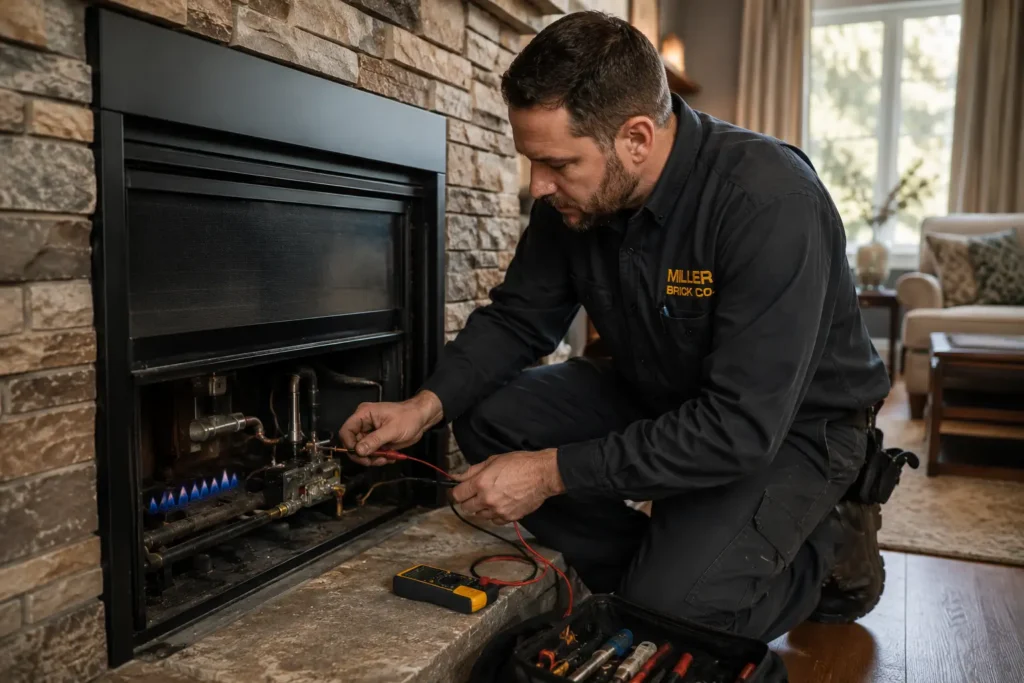
Start with the simplest fix and work up from there.
1. Clean the pilot assembly: Turn off the gas, let everything cool and gently clear dust or debris from the pilot orifice and around the thermocouple with a soft brush or compressed air.
2. Reposition the thermocouple: If the rod looks bent away from the flame, it may just need to be nudged back into direct contact with the pilot fire.
3. Hold the knob longer:Thirty seconds isn’t always enough on an older unit. Try holding it a full 60 to 90 seconds before releasing.
4. Check for drafts: Close nearby windows, check the glass door seal and rule out a chimney draft issue before assuming a part has failed.
5. Replace the thermocouple: If cleaning and repositioning don’t solve it, the part is likely worn out. A gas fireplace thermocouple replacement is a common, relatively low-cost repair though it involves working directly with gas components and should be done by someone comfortable with that.
FAQs
Why does my gas fireplace pilot light keep going out?
Nine times out of ten it’s a weak thermocouple that’s no longer generating enough current to hold the safety valve open. Draft from a bad gasket and a clogged pilot orifice are the next most common causes.
How do I know if my thermocouple is bad?
Watch the pilot flame. It should be a strong blue flame that fully engulfs the tip of the thermocouple rod. If it’s yellow, small, or leaning away from the rod, that’s usually the tell. A multimeter reading under 20 mV confirms it.
Can I replace a thermocouple myself?
Yes, on most standard pilot systems this is a beginner-friendly repair. Shut off the gas, unthread the old thermocouple, thread in the replacement, and hand-tighten plus a quarter turn. Thermopile systems and sealed-combustion units are less forgiving and worth having a technician handle.
What’s the difference between a thermocouple and a thermopile?
A thermocouple only produces enough millivoltage to keep the pilot valve open. A thermopile produces significantly more and can power a wall switch, remote receiver, or blower motor in addition to the pilot valve. See the comparison table above for the full breakdown.
Why won’t my gas fireplace turn on even though the pilot is lit?
If the pilot stays lit but the main burner won’t fire, check the wall switch or remote batteries first, then the main burner valve. This is a separate circuit from the pilot safety system, so a good pilot flame doesn’t rule out a bad valve or dead batteries.
How long should I hold the pilot button when relighting?
Hold it for a full 30 to 60 seconds after the flame catches before releasing. That’s how long the thermocouple needs to heat up and generate enough current to keep the valve open on its own. Releasing early is the single most common reason a “successful” relight goes right back out.
Miller Brick’s fireplace techs work on Heatilator, Heat & Glo and Majestic units every week, so if your pilot light is still giving you trouble after trying these fixes, contact us and we’ll get a technician out to take a look.